Car Rental in Pula
Overview
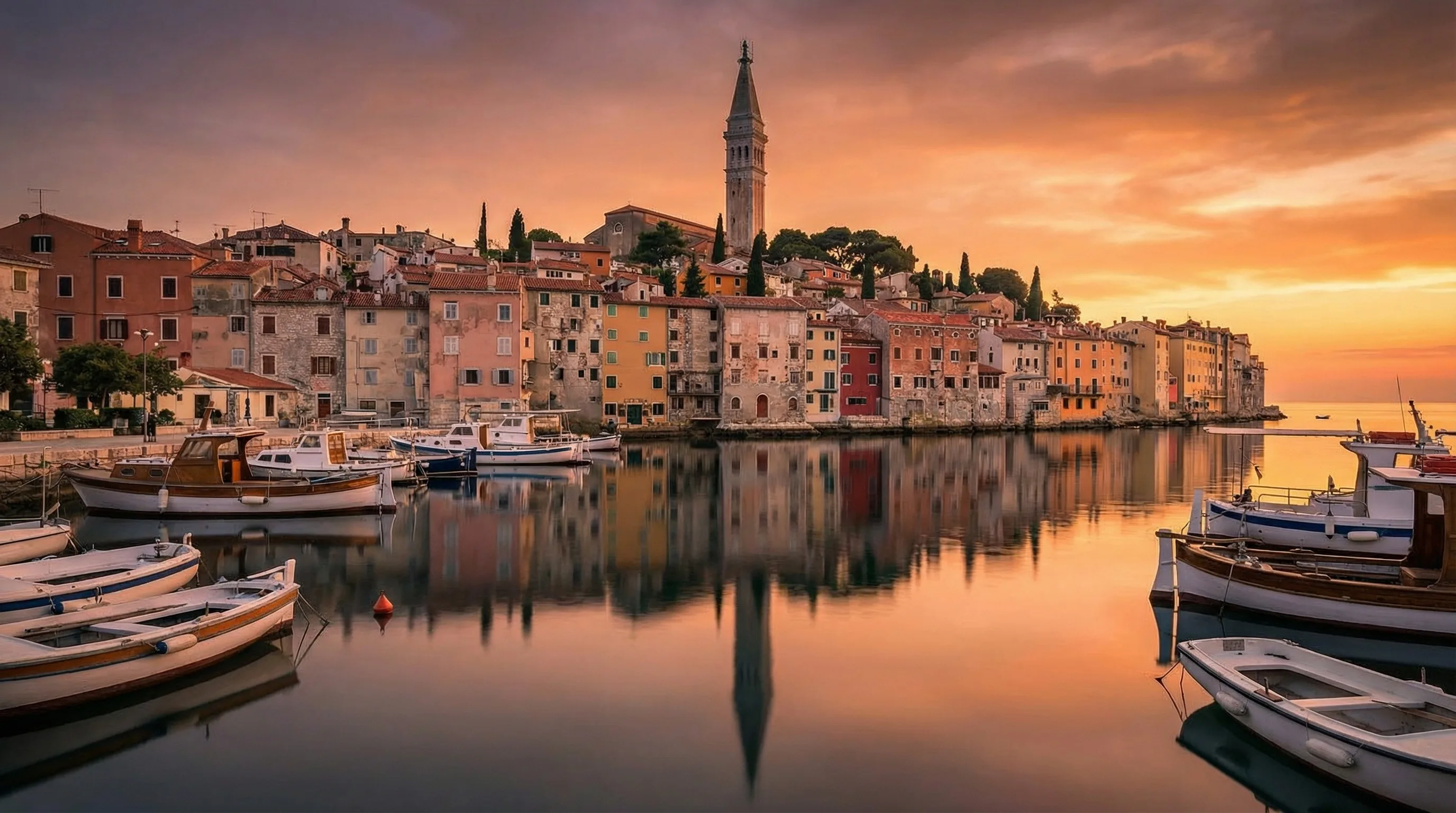
Pula is the gateway to Istria, and Istria is arguably the best driving region in Croatia. The peninsula is compact – you can drive from one end to the other in under an hour – but packed with enough variety to fill a week. Hill towns like Motovun and Groznjan sit on ridge tops above truffle forests. The western coast has Rovinj (one of the most photogenic towns in the Mediterranean), Porec (home to a sixth-century basilica), and Umag (close enough to Italy to pick up Italian radio). The interior is a landscape of rolling vineyards, olive groves, and Malvasia wine cellars that welcome visitors without an appointment.
The rental market in Pula is affordable by Croatian standards. Economy cars start at 15-22 EUR per day in the off-season and reach 38-55 EUR in peak summer – significantly cheaper than Split or Dubrovnik. The airport is tiny but functional, with seasonal flights from across Europe. Agency selection is adequate: the main international names plus several Istrian locals. Local agencies here tend to be professional and well-reviewed, partly because the Istrian tourism infrastructure is more mature and quality-conscious than further south.
One important note: Pula Airport (PUY) operates primarily as a seasonal airport. Most flights run from May through October, with limited or no scheduled service in winter. If you are coming in the off-season, you may need to fly into Rijeka, Zagreb, or even Trieste (Italy) and drive to Pula. From Rijeka, it is 100 km and about 1.5 hours; from Trieste, 120 km and about the same. From Zagreb, count on 3 hours via the A1 and A8 motorways.
Driving tips
Istria is one of the most pleasant driving regions in our coverage. The roads are well-maintained, the distances are short, and the traffic – even in summer – is lighter than on the Dalmatian coast. The main motorway through the peninsula is the Istrian Y (the A8 from Rijeka to Kanfanar and the A9 from the Slovenian border to Pula), which is tolled but fast. Off the motorway, the two-lane roads through the interior wind through the same landscapes that attract cyclists from across Europe: rolling hills, vineyards, and stone villages.
The ideal Istria driving itinerary is a loop. From Pula, drive north along the western coast through Rovinj (35 km, 40 min), continue to Porec (55 km from Pula), cut inland to Motovun (80 km from Pula), and return south through the interior via Pazin. The full loop is about 180 km and takes a full day with stops. You can extend it to Umag and Novigrad in the northwest corner, adding another 40 km.
The roads between the hill towns of the interior are narrow and winding, with occasional livestock crossings and farm vehicles. Speed limits drop to 40 km/h in villages and are enforced by the occasional mobile police unit. The road up to Motovun is particularly dramatic – a series of switchbacks climbing to the hilltop town, with views across the Mirna river valley below. Parking at Motovun is at the base of the hill (free) with a shuttle or a steep walk up.
Fuel is available in every town of reasonable size. Istria uses the same Euro 95 and diesel as the rest of Croatia, at the same prices (1.40-1.55 EUR/L). The petrol stations along the A9 motorway are modern and well-stocked.
Parking
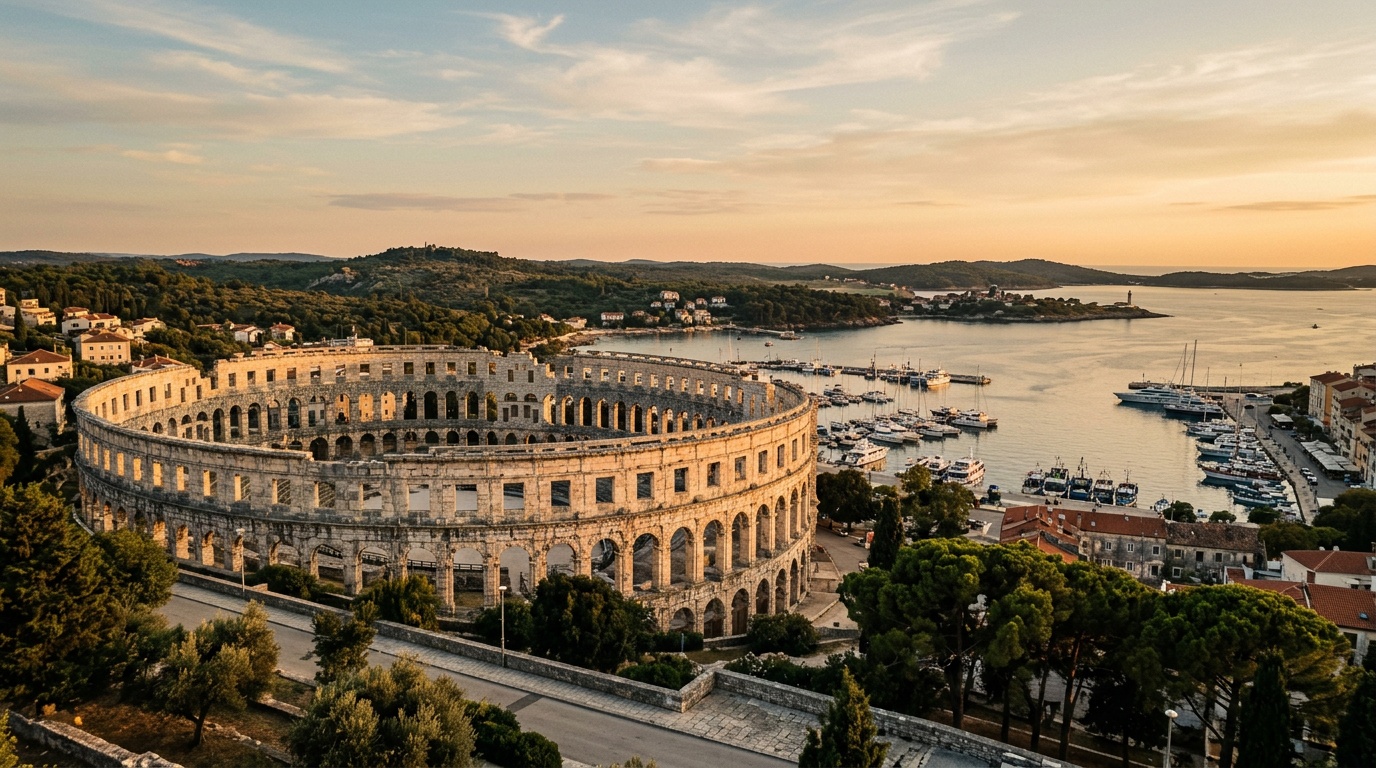
Parking in Pula is straightforward by Croatian coastal standards. The city center has metered street parking, with rates of 1-1.50 EUR per hour near the Arena (the Roman amphitheater that dominates the waterfront). Availability is decent – even in summer, you can usually find a spot within a 10-minute walk of the main sights.
The underground garage at the Forum, in the heart of the city, charges 1.50 EUR per hour with a daily maximum of about 12 EUR. It is the simplest option for a day of sightseeing: park, walk to the Arena and the Temple of Augustus, explore the harbor, and come back.
For beach days on the Verudela or Stoja peninsulas (south of the center), most resorts and hotel complexes have their own parking. If you are freelancing to the public beaches, roadside parking is usually available and either free or cheap (0.50-1 EUR/hour).
Rovinj is the one Istrian town where parking gets genuinely difficult. The old town sits on a narrow peninsula with almost no car access. Park in the large lot at Valdibora (south of the old town, 1.50 EUR/hour) and walk in. Arriving before 10 AM in summer is strongly advised.
One more note on the Istrian interior: the Parenzana trail – a former narrow-gauge railway line between Trieste and Porec – has been converted into a cycling and walking path that crosses through some of the prettiest hilltop villages. While you obviously cannot drive the trail, you can use the car to reach different starting points along its route (Motovun, Groznjan, Livade) and hike or cycle sections of it. Livade, in the Mirna valley, is the self-proclaimed truffle capital of Istria and home to the annual truffle festival in October. The restaurants there serve truffle everything – truffle pasta, truffle omelette, truffle ice cream – and the prices are about half of what you would pay for the same truffle quality in Italy, which is 20 km away.
Border crossings
Pula’s location at the southern tip of Istria puts you close to both Slovenia and Italy. Trieste is 120 km and about 1.5 hours via the A9 motorway north to the Slovenian border, then the Slovenian motorway to Italy. All three countries are in the EU and Schengen zone, so there are no border stops. You will need a Slovenian motorway e-vignette (available online, 15 EUR for seven days), because the Slovenian section uses vignettes rather than tolls.
Most international agencies allow Slovenia and Italy without an extra cross-border fee – these are Schengen countries with shared insurance frameworks. Local agencies may still charge a small documentation fee (10-20 EUR), so ask when booking.
The Slovenian coast (Portoroz, Piran, Koper) is just 60-80 km from Pula and makes an easy half-day excursion. Piran in particular is worth the drive – a miniature Venice-like town at the tip of a narrow peninsula, with better seafood restaurants and fewer tourists than Rovinj.
For longer trips, Ljubljana is 200 km northeast and doable as a long day trip, though we would suggest at least an overnight. Venice is theoretically reachable by car (300 km, about 3.5 hours via Trieste), but parking in Venice is expensive enough to defeat the purpose. Take the train from Trieste instead.