Car Rental in Zagreb
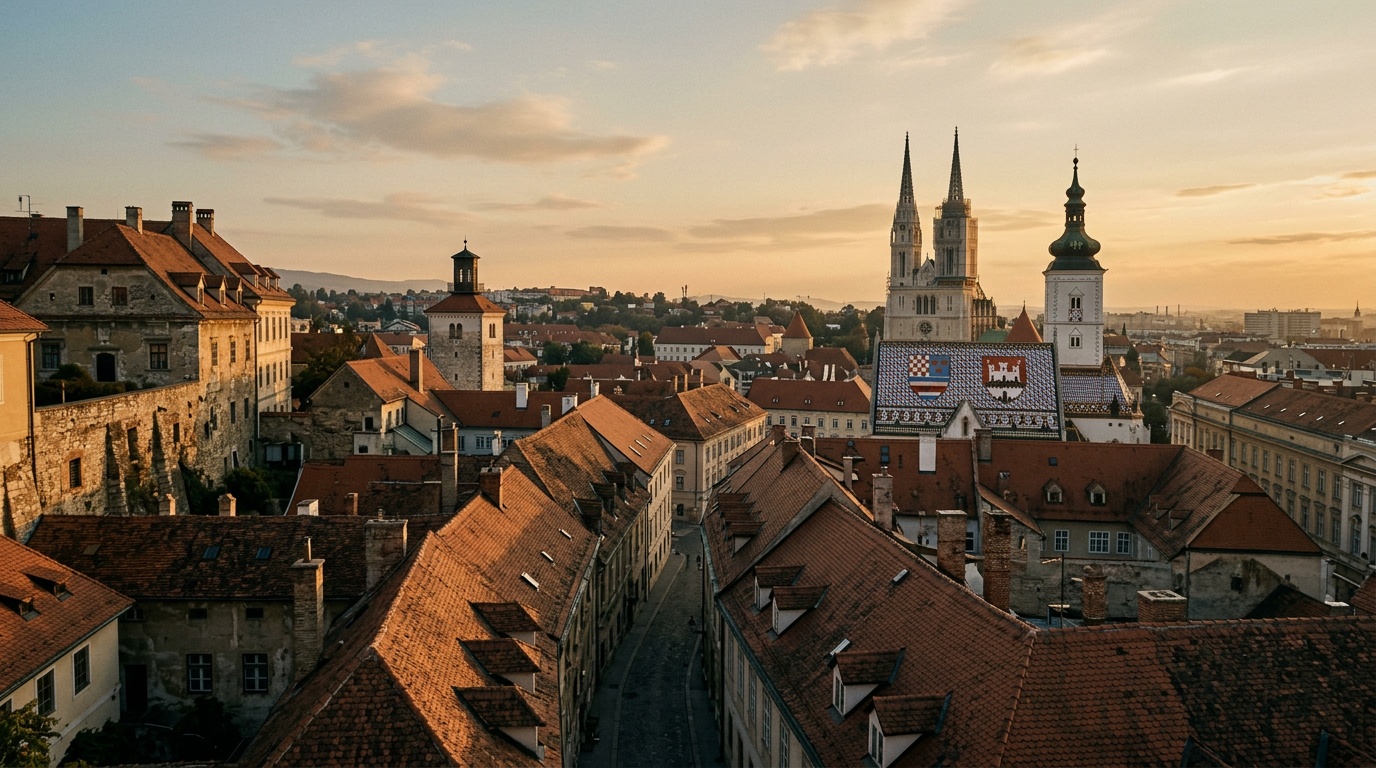
Overview
Zagreb is where most inland Croatia itineraries start and end. The capital sits at the intersection of the A1 motorway (heading south to Split and the coast) and the A3 (running east-west between Ljubljana and Belgrade), making it the natural rental pickup point for anyone planning to drive through the country rather than just visiting the Dalmatian coast.
The rental market in Zagreb is calmer and cheaper than the coastal cities. Prices are 20-30 percent lower than Split or Dubrovnik in the same season, which makes sense – nobody flies to Zagreb specifically for a beach holiday. What Zagreb offers is a sensible starting point. Pick up your car at the airport, spend a day in the city if you feel like it, and then head south on the A1 toward Plitvice Lakes, which is the single best day trip you can do from the capital. The 130 km drive to Plitvice takes about two hours, and having your own car lets you arrive early in the morning before the tour bus crowds.
The agency selection at Zagreb Airport is solid. All the international names are there – Sixt, Europcar, Enterprise, Hertz – alongside Croatian locals like Oryx Rent a Car. Local agencies tend to be cheaper by 10-15 percent but may have stricter cross-border policies. If you are planning to drive into Slovenia (common, since Ljubljana is only 140 km away), confirm with your agency that it is included at no extra fee. Most allow it without surcharge, since both countries are in Schengen, but a few smaller locals still charge 20-30 EUR for the paperwork.
Driving tips
Zagreb traffic is manageable by European capital standards. Rush hour (7-9 AM, 4-6 PM) clogs the main arteries, particularly around Slavonska avenija and the Jankomir interchange where the A3 meets the city. Outside peak hours, getting around is straightforward. The tram network handles most of the central zone, so you probably will not need the car inside the city at all.
The motorway network radiating from Zagreb is excellent. The A1 south toward Split is a modern, well-maintained toll road with service stations every 30-40 km. The toll from Zagreb to Split runs about 25 EUR one way for a standard car – not cheap, but the alternative is the old D1 road through Lika, which adds 2-3 hours to the journey and is only worth it for the scenery. The A2 north toward Slovenia is equally good and connects directly to the Slovenian motorway system.
Speed cameras are present on the motorways, particularly in the tunnel sections between Zagreb and Split. There are fixed cameras at tunnel entrances (the Mala Kapela and Sveti Rok tunnels are the main ones) and occasional mobile units on the motorway approaches to the city. The speed limit is 130 km/h on motorways, 90 km/h on open roads, and 50 km/h in towns, dropping to 30 km/h in some residential zones. Fines for exceeding the limit by more than 20 km/h start at 65 EUR and escalate quickly.
One quirk about Croatian motorways: the toll system uses tickets. You take a ticket at the entrance ramp and pay at the exit based on distance driven. Cash (kuna was replaced by euro in 2023, so it is all EUR now), credit cards, and contactless payment all work at the booths. There is also an ENC electronic tag system for regular users, but it is not worth getting for a rental.
Parking
Parking in central Zagreb is zoned. Zone 1 covers the core (around Ban Jelacic Square and Tkalciceva) with rates of 1.10 EUR per hour, maximum two hours. Zone 2 extends further out at 0.80 EUR per hour, maximum three hours. Outside these zones, street parking is generally free but fills up during working hours.
If you are staying in the center, use the hotel parking or one of the larger garages. The Importanne Center garage and the Cvjetni Passage garage are both centrally located and charge around 1.50 EUR per hour. For a full day of sightseeing, expect to pay 12-15 EUR in a garage. It is not cheap, but it is vastly simpler than circling for a meter spot.
Driving into the very center (around the cathedral and upper town) is discouraged and partially restricted. The streets are narrow, cobblestoned in places, and the tram tracks create awkward lane situations. Park in a garage near the station and walk or take the tram – the center is compact enough to cover on foot.
Border crossings
Zagreb is well-positioned for cross-border day trips and one-way rentals. The most common crossing is into Slovenia: the A2 motorway leads directly to the Bregana-Obrezje border point, which is effectively non-existent since both countries are in Schengen. There is no stop, no passport check – you simply drive through. The only thing you need is a Slovenian motorway vignette (e-vignette, available online for 15 EUR for seven days), because Slovenia uses a vignette system rather than toll booths.
Heading east to Belgrade takes about four hours on the A3. The border crossing at Bajakovo-Batrovci is the main highway crossing into Serbia. Serbia is outside the EU, so you will need to show passports and vehicle documents. During summer weekends, waits of 30-60 minutes are possible. Make sure your rental agency permits Serbia – most internationals do, but a cross-border fee of 30-50 EUR is standard.
Bosnia is reachable via several crossings south and east of Zagreb. The most common route goes through Sisak and enters Bosnia near Kostajnica or via the A1 motorway exit at Bosiljevo and then south through Bihac. The roads in central Bosnia are scenic but slow – expect winding two-lane roads through mountains. Not every agency allows Bosnia, so ask before booking.
Day trips from Zagreb
Beyond the border crossings, Zagreb is the starting point for several excellent driving day trips within Croatia. Plitvice Lakes (130 km, 2 hours via the A1) is the headline act and justifies a rental on its own. But the Samobor hills (25 km west, 30 minutes) offer a low-key half-day escape – the little town is famous for kremsnita (custard cake) and the surrounding hills have marked hiking trails within easy reach.
The Zagorje region, north of Zagreb, is a rolling green landscape of castles, thermal spas, and vineyard-covered hills. Trakoscan Castle (80 km north, 1 hour) and Veliki Tabor Castle (55 km northwest, 45 minutes) are both well-preserved medieval fortifications surrounded by the kind of pastoral scenery that makes you understand why Zagreb’s upper class built summer estates here. The roads are two-lane and wind through villages, but traffic is light and the driving is pleasant. Combine both castles with lunch in a Zagorje restaurant (look for strukli, a baked cheese pastry that is Zagreb’s unofficial comfort food) for a full day that costs you nothing but fuel and a parking fee.