Car Rental in Kotor
Overview
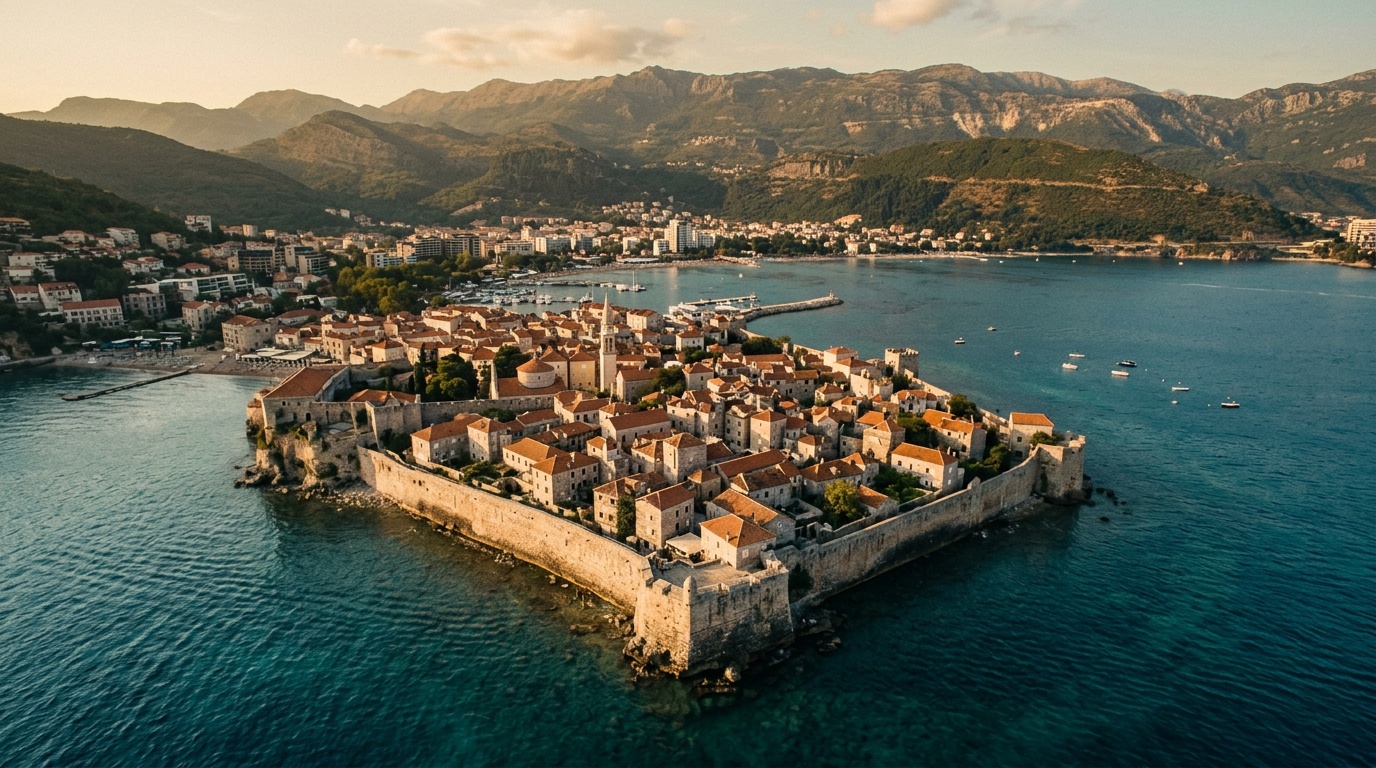
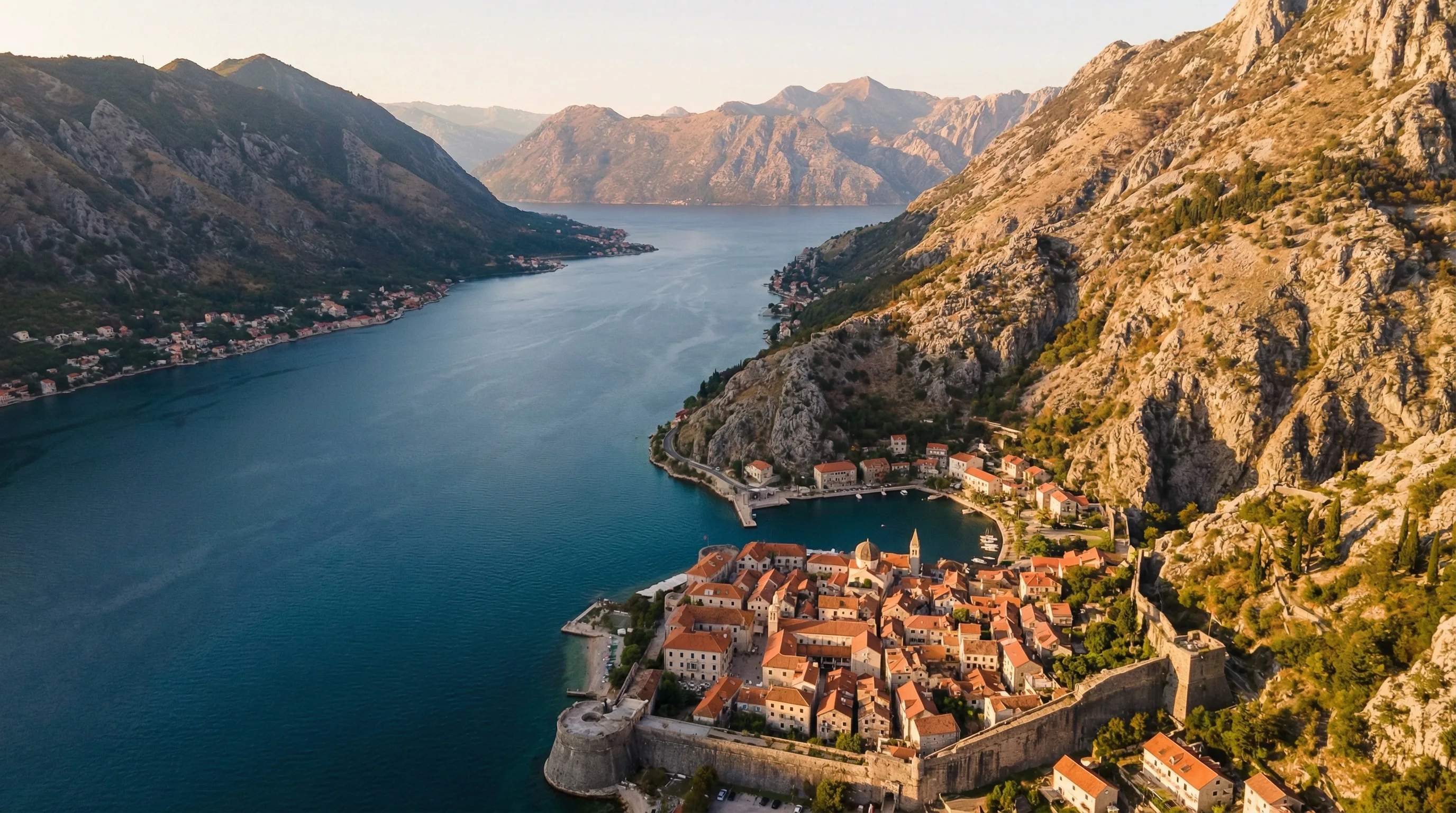
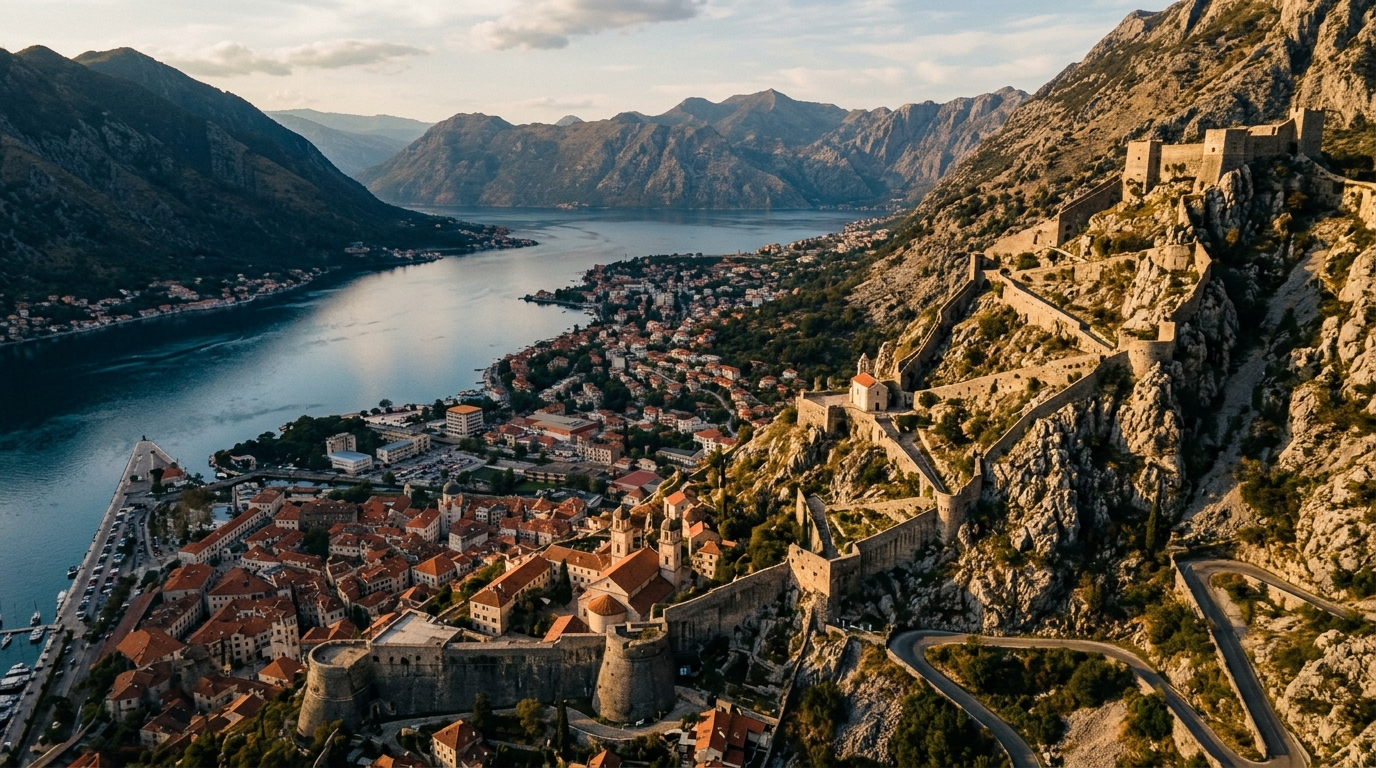
Kotor is the postcard. The walled old town sits at the head of the Bay of Kotor — a body of water so surrounded by mountains that it looks like a landlocked lake until you see the narrow gap leading out to the Adriatic. Cruise ships dock here daily from April through October. Day-trippers from Dubrovnik fill the old town by noon. The fortress walls climb the mountainside behind the town like a stone staircase for giants. It is spectacular, and also very small. You can walk the entire old town in 20 minutes.
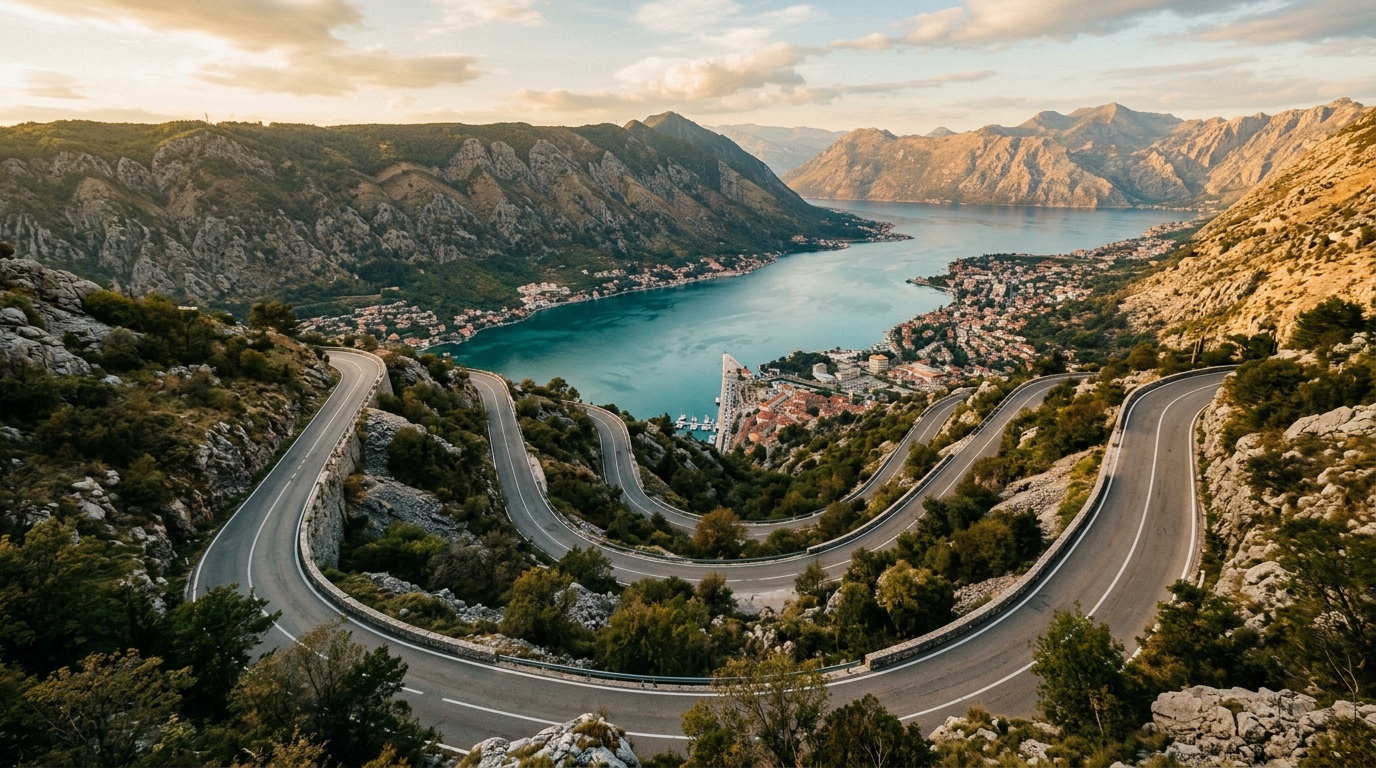
Which is why a rental car in Kotor is less about Kotor itself and more about using it as a base. The Bay of Kotor circuit — a 30 km loop around the inner bay through Perast, Risan, and Stoliv — is one of the most scenic short drives in Europe. The road to Lovcen National Park starts right behind the town and climbs 25 switchbacks to 1,000 meters. Budva is 22 km south over a small pass. Dubrovnik is 42 km north across the Croatian border. With a car, Kotor becomes the hub for a full week of day trips. Without one, you are limited to the old town and whatever the tour boats offer.
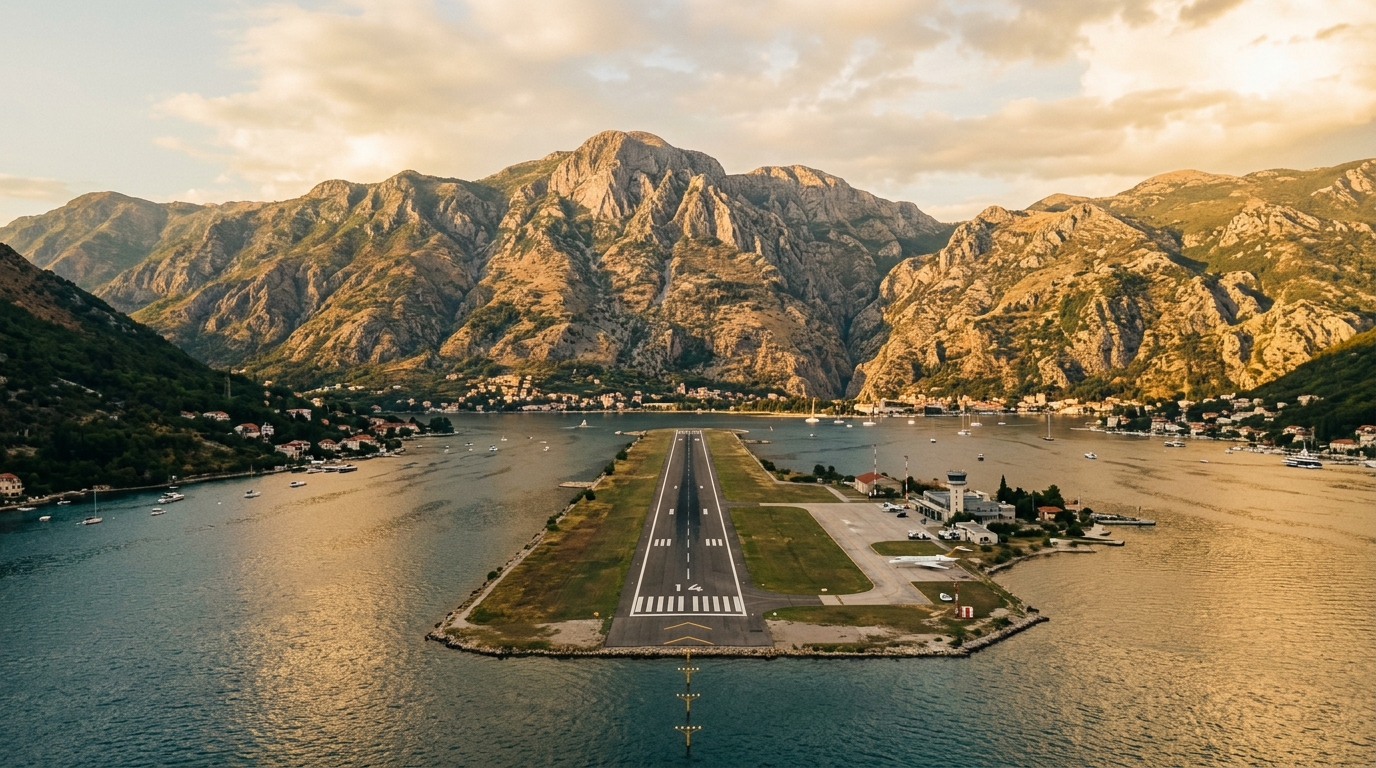
The rental market in Kotor itself is minimal. Two or three local agencies operate near the bus station with small fleets and premium pricing. Our advice: pick up at Tivat Airport, 10 km to the west. It has the full agency roster and better rates. The drive to Kotor takes 20-30 minutes along the bay — one of those drives where you start making excuses to go slowly because the scenery is too good to rush past.
Summer prices reflect Kotor’s popularity with cruise passengers and the general Montenegro coast premium. Economy cars from a Kotor city agency start at 16 EUR/day in winter, but the real demand window is May through September, when the same car runs 20-50 EUR depending on the month. Automatics are in particularly short supply — the narrow old town streets and the Lovcen switchbacks make manual driving a genuine skill exercise, so tourists gravitate toward automatics and the agencies know it.
Driving tips
The Bay of Kotor road is beautiful and infuriating in equal measure. It is a two-lane road that follows the water’s edge through a dozen villages, each with its own 40 km/h zone, parked cars encroaching on the lane, and at least one cafe with outdoor seating that forces pedestrians into the road. The 30 km bay circuit takes about an hour at a realistic pace. This is not a road to hurry on — enjoy it, because the views are the entire point.
The star drive from Kotor is the P1 to Lovcen. From the old town, you head uphill immediately. The road gains 1,000 meters of elevation in 16 km through 25 numbered switchback turns. Guardrails exist on some turns. Others have stone walls that a determined car could breach. The road surface is acceptable but narrow — meeting an oncoming vehicle on a blind turn requires confidence and patience. We have driven this road in a VW Polo and it was fine, though we were glad for the manual gearbox on the steepest sections. At the top, the views extend across the entire bay and out to the Adriatic. There is a mausoleum at the summit of Jezerski Vrh (1,657 m) with another 461 steps beyond the parking area. Worth every one.
South to Budva, the road crosses a low pass via the Trojica junction and descends to the coast. It is a well-maintained 22 km stretch that takes about 30 minutes. Watch for speed cameras near the tunnel on the Budva side.
One local hazard: cruise ship days. When a large ship docks in Kotor (happens 3-5 times per week in summer), the waterfront road fills with tour buses and the parking situation near the old town becomes impossible. Check the cruise ship schedule online before planning a Kotor visit by car — or arrive before 9 AM.
Parking
Parking in Kotor is the most challenging aspect of visiting by car. The old town is entirely pedestrian. The surrounding area has limited space, and summer demand is intense.
The main parking lot outside the River Gate (northern entrance) is the most convenient option. It charges 1.50-2.00 EUR per hour and has both covered and uncovered sections. In summer, it fills before 10 AM. If you arrive after that, you will be directed to overflow areas or turned away.
The cruise terminal parking area, 500 meters south of the old town, is a larger lot at about 1 EUR per hour. On days when no cruise ships are docked, this is the easiest option. On cruise days, it fills with buses and is often closed to private vehicles.
The local strategy is to park in Dobrota, a settlement 2 km north along the bay road. Roadside parking here is free and unrestricted. Walk to the old town in 20 minutes along the waterfront promenade, or take a quick taxi for 3-4 EUR. This is genuinely the best approach in July and August — less stress, no cost, and a pleasant walk.
Hotels in Dobrota and along the bay road generally have private parking. Hotels inside or immediately adjacent to the old town walls do not have parking and cannot create it — there is literally no space. If you book an old town hotel, confirm parking arrangements in advance. Some have agreements with nearby lots; others will simply tell you to find a spot.
Border crossings
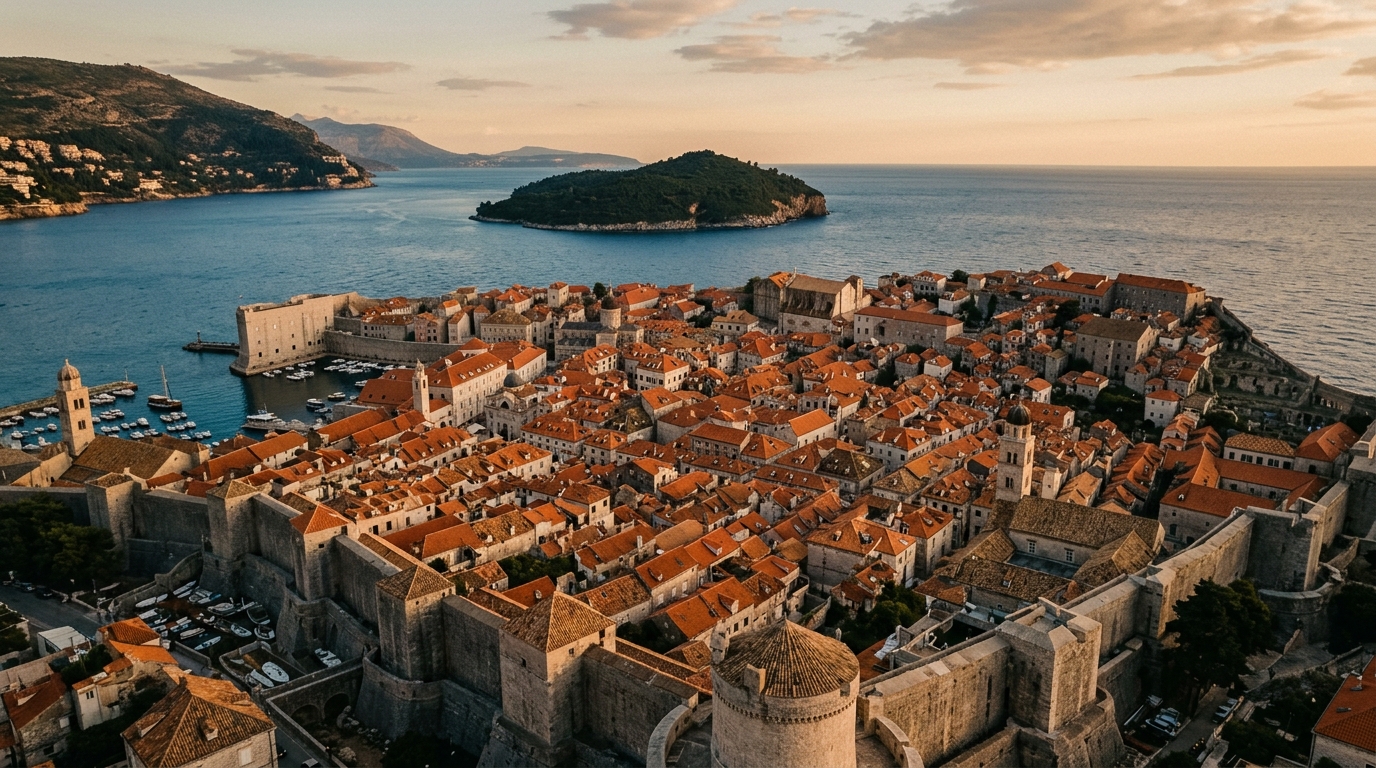
The Dubrovnik day trip is the most common cross-border drive from Kotor. The route follows the bay’s northern shore through Herceg Novi to the Debeli Brijeg crossing — 42 km, taking 45 minutes in the off-season and up to 1.5 hours in summer depending on the border queue.
The border wait is the variable. In winter and shoulder season, you will wait 5-15 minutes. In July and August, 30-90 minute waits are standard between 10 AM and 4 PM. Tips for shorter waits: cross before 8 AM, or try the Konfin crossing near Igalo — it is a smaller checkpoint that sometimes moves faster, though it adds a few km.
Cross-border permission for Croatia costs 30-50 EUR from most agencies and must be arranged at the time of booking. Some agencies do not allow their economy cars to cross — only midsize and above. If a Dubrovnik day trip is in your plans, sort this out before you arrive.
The Lovcen drive mentioned above is not a border crossing, but it deserves a repeat mention here because it is the single best driving experience available from Kotor. The road climbs from sea level to the national park in under an hour. You can continue from the Lovcen plateau down to Cetinje (Montenegro’s old royal capital, 30 minutes further) and loop back to the coast — making a full circuit of about 3-4 hours that covers bay, mountain, and inland terrain.