Car Rental in Timisoara
Overview
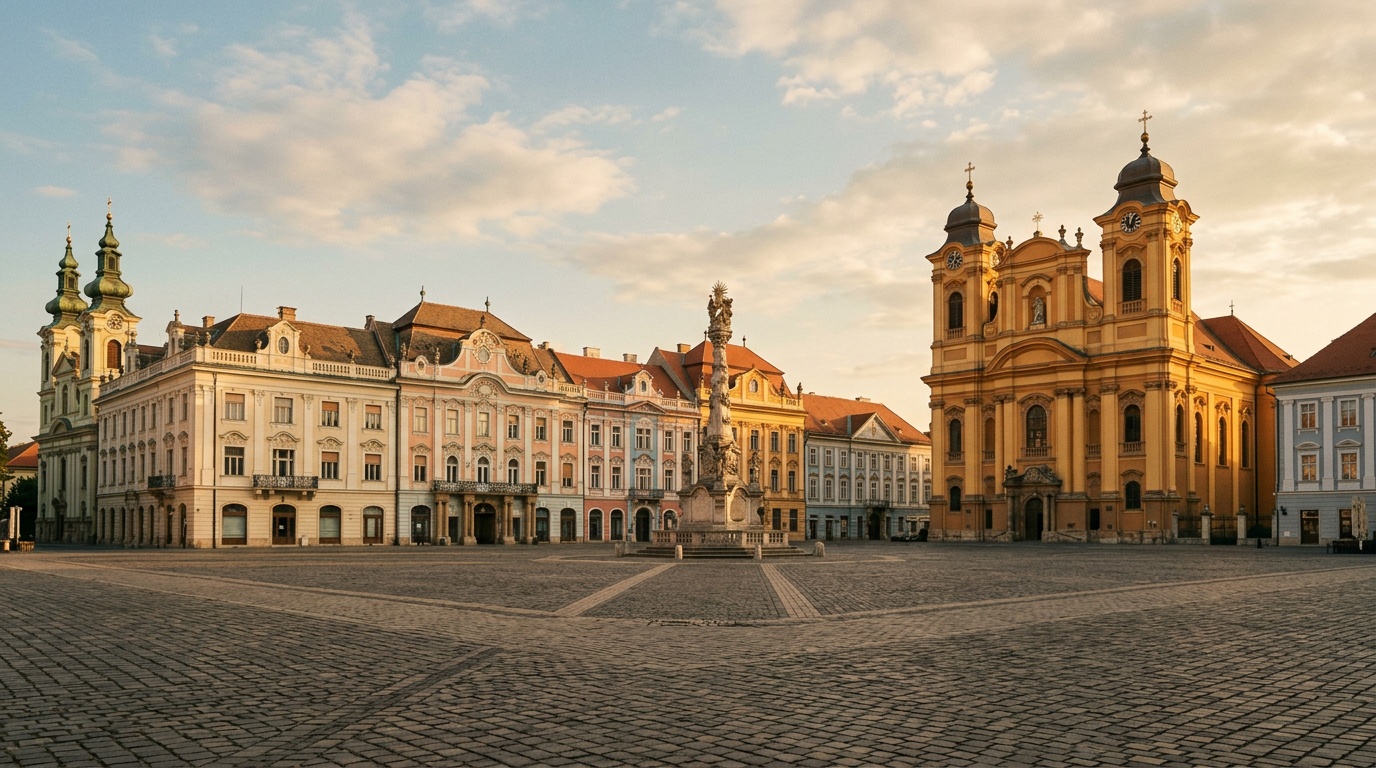
Timisoara is the city that started the Romanian Revolution in 1989 and has been quietly reinventing itself since. In 2023 it was a European Capital of Culture. It has a Viennese-influenced city center with Habsburg-era squares, a thriving IT industry that brings the average age down, and a location that is geographically closer to Belgrade, Budapest, and Vienna than to Bucharest. For a car rental trip, this last fact is the most relevant: Timisoara is the natural entry point for western Romania and a practical cross-border hub.
The rental market here is functional but not deep. Autonom and Sixt have airport desks. Enterprise operates through a partner. A couple of local agencies offer budget options. The prices are among the lowest in our coverage — 10-12 EUR per day for an economy car in the off-season, 20-32 EUR in summer. The limited competition means you have fewer choices than in Bucharest or Cluj, but the vehicles are the same models at comparable or better rates. We picked up a Dacia Duster at Timisoara Airport for 16 EUR per day in June — a car that was quoted at 22 EUR from Bucharest for the same dates.
Timisoara itself is not a town where you need a car. The center is walkable, the trams work, and the main sights (Piata Unirii, Piata Victoriei, the Bega canal) are within a 20-minute walk of each other. The car is for getting out: the Banat region to the south has rolling hills, Serbian-influenced villages, and a sense of space that the crowded Transylvanian tourist circuit lacks. The Retezat Mountains are two hours southeast — one of Romania’s wildest national parks. The road to Hunedoara and Corvin Castle (2 hours east) is one of those drives where the destination is impressive but the journey through the Hateg valley is the real reward.
Driving tips
Timisoara sits on the flat Banat plain. The driving in and around the city is straightforward — wide roads, logical layout, moderate traffic. Rush hour exists but is mild compared to Bucharest. The main challenge is navigating the one-way streets in the center, which loop around the pedestrianized squares in a pattern that requires local knowledge or patient reliance on GPS.
The road network radiating from Timisoara is a mix of decent national highways and stretches of motorway. The A1 motorway toward Lugoj (50 km east) is complete and fast. Beyond Lugoj, the road reverts to the DN6/DN68, which passes through villages en route to Deva, Hunedoara, and eventually Sibiu. The DN59 south toward Vrsac and the Serbian border is well-maintained but two-lane throughout.
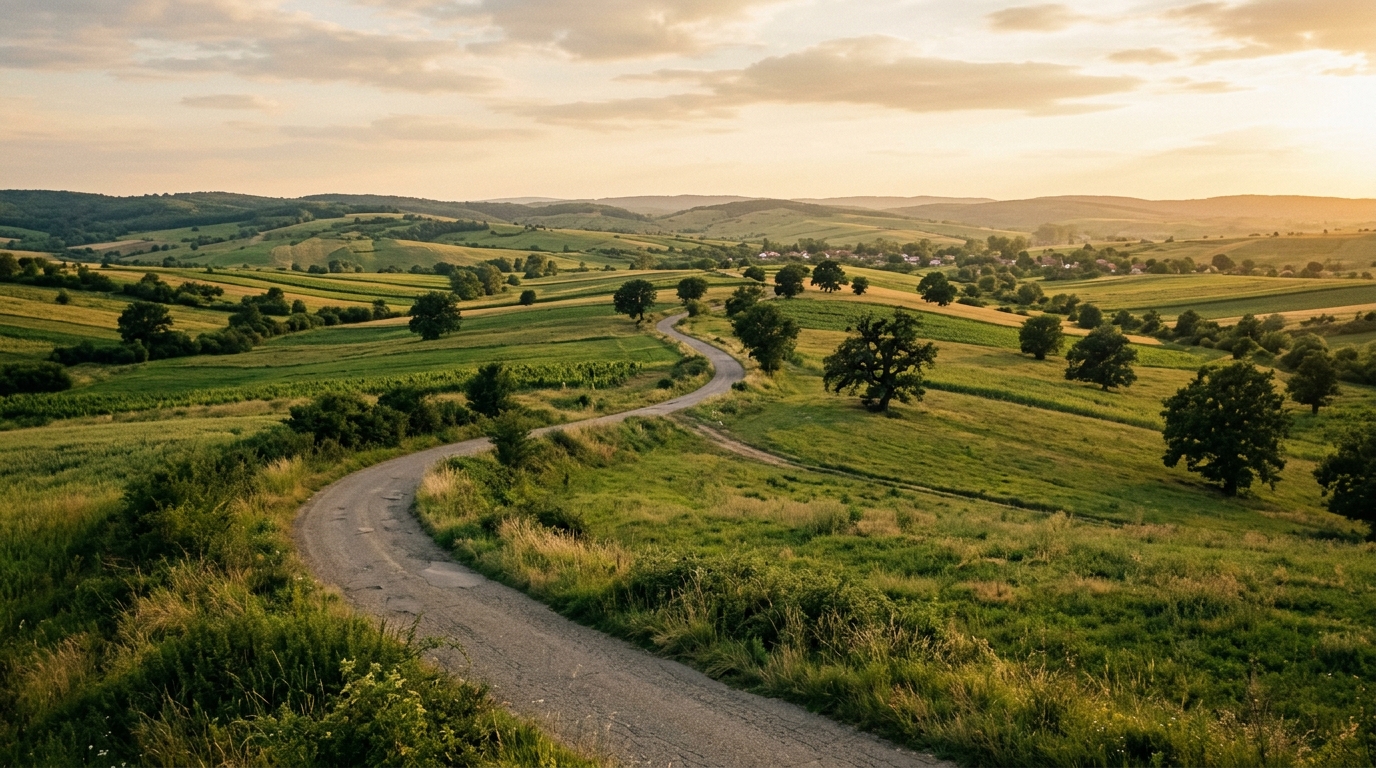
The drive to Hunedoara and Corvin Castle deserves specific mention. The castle is one of the most impressive medieval fortifications in Europe — a Gothic structure with drawbridges, towers, and a dungeon that Vlad the Impaler may or may not have been imprisoned in. The road from Timisoara (170 km, about 2 hours) passes through the Mures valley and the Hateg depression. It is a pleasant, undemanding drive on good roads.
For the Retezat Mountains, drive to Hateg and then south on the DN66A toward Nucshoara or Campu lui Neag. The road narrows and climbs as you approach the national park. The final 15-20 km are slow going — a single-lane mountain road in variable condition. Worth it if you are a hiking person. Not recommended for the smallest economy car.
Speed enforcement around Timisoara is less intense than around Bucharest, but police radar checks exist along the DN59 and the approaches to the A1 motorway. The standard Romanian rules apply: 50 in town, 90-100 on open roads, 130 on the motorway. A 7-day Romanian road vignette (Rovinieta) costs about 4 EUR — buy it online before you need the motorway.
Parking
Timisoara has the most relaxed parking situation of any Romanian city in our coverage. The center uses SMS-based metered parking at 2-3 RON per hour (about 0.50-0.60 EUR) — significantly cheaper than Bucharest or Cluj. Spots are generally available outside weekday business hours.
The Iulius Town complex on the east side has a large modern garage with the first two hours free. For the central squares (both pedestrianized), park on the surrounding streets or use the underground lot beneath the National Theater on Piata Victoriei. The Fabric and Iosefin neighborhoods — historic quarters with colorful decaying architecture — have ample free street parking within a 10-15 minute walk of the center.
At the airport, parking is 10-15 RON/day (~2-3 EUR). Genuinely cheap. No need for off-site alternatives.
Border crossings
Timisoara’s proximity to Serbia makes Belgrade a viable weekend trip. The distance is 160 km, about 2.5 hours via the Moravita-Vatin or Stambedza-Vrsac border crossings. This is an EU-to-non-EU border, so expect passport checks and 15-30 minute waits. Serbia does not require a visa for EU citizens for stays under 90 days.
The catch is the rental agencies. Not all of them allow travel to Serbia. Some ban it outright; others charge a cross-border fee of 30-50 EUR. Autonom’s policy on Serbia has varied in our experience — clarify at the time of booking, not at the counter. If Serbia is in your plans, confirm the policy before choosing an agency.
Hungary is the easier cross-border option. The Nadlac crossing (via Arad, 55 km north) is the main Romania-Hungary border point. Both countries are EU members, so the check is brief. Once across, you hit the Hungarian motorway system — fast, tolled (buy an e-vignette online), and efficient. Szeged is 2 hours from Timisoara, Budapest 3.5-4 hours. Most agencies include Hungary at no extra charge.
One routing tip: if your final destination is Budapest, consider whether it makes more sense to fly. Budget airlines connect Timisoara to Budapest directly. Driving 4 hours through two countries for a weekend trip is romantic but not always practical.