Car Rental in Skopje
Skopje’s rental market is small, functional, and cheap. The city has maybe a dozen agencies — a couple of international names at the airport, the rest are local operators scattered around the center. Economy cars start at 10-12 EUR per day in winter and climb to 22-35 EUR in summer, which puts Skopje comfortably in the budget tier of our coverage. The fleets skew toward older European compacts — Renault Clios, VW Polos, Skoda Fabias — mostly manual transmission. If you need an automatic, book well in advance and expect to pay 30-50 percent more. The local agencies (Lotus, Hermes, TM Rent) tend to be cheaper than the international chains by a noticeable margin, and our experience with them has been straightforward: basic cars, basic service, no surprises.
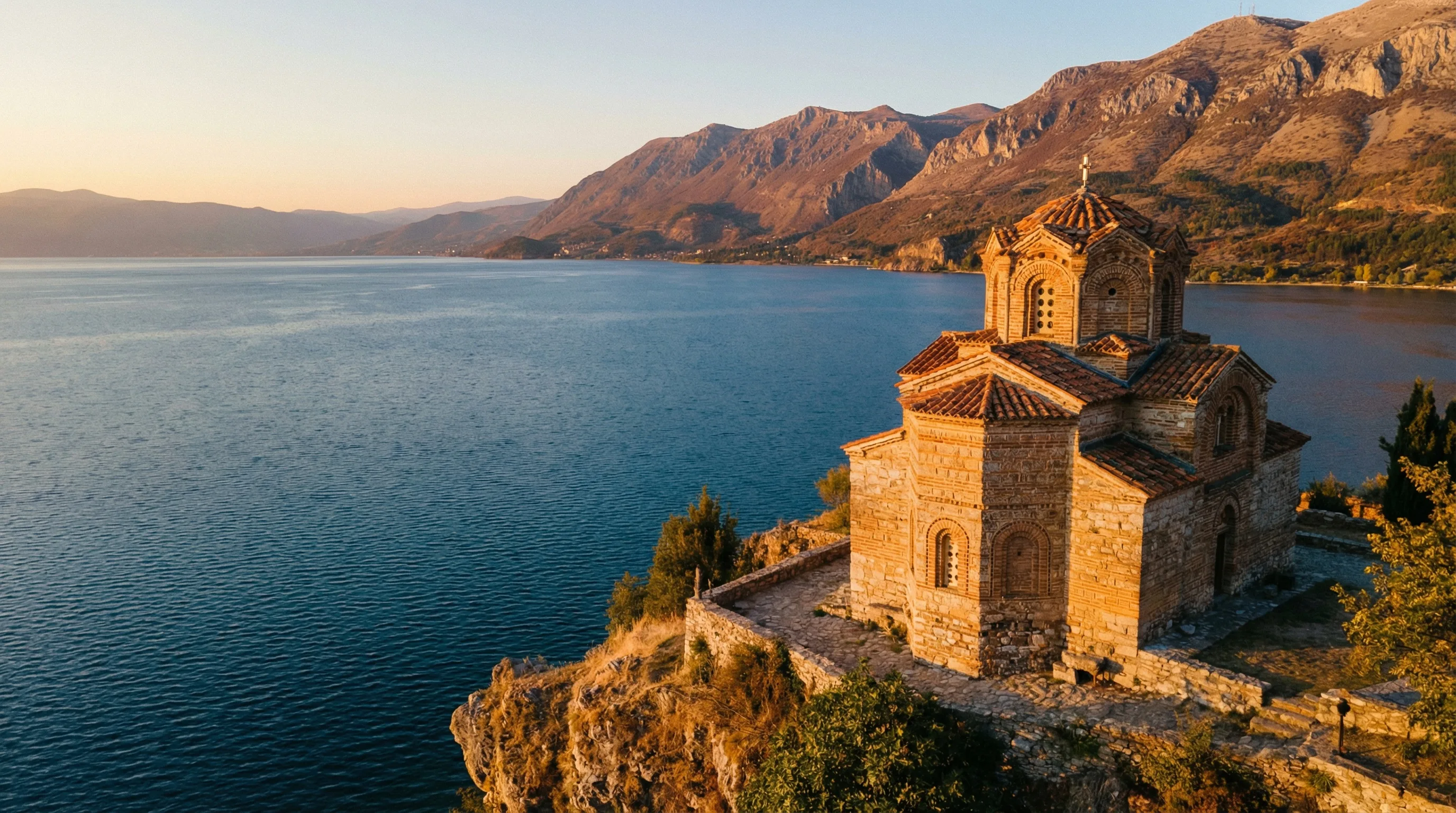
Skopje itself has the most eccentric city center in the Balkans — the result of a massive government building program from the 2010s that filled the downtown with neoclassical facades, bronze statues, triumphal arches, and a giant Alexander the Great statue on a column in the main square. Whether you find it charming or absurd is a matter of taste. What matters for a rental driver is that the center is compact, mostly walkable, and not where you need a car. The value of a Skopje rental is the access it gives you to the rest of North Macedonia and beyond: Ohrid (2.5 hours southwest), Matka Canyon (30 minutes), Mavrovo National Park (90 minutes), and three international borders within half a day’s drive.
Driving tips
Driving in Skopje is fine during the day and slightly chaotic during rush hours. The city has a ring road that handles east-west and north-south traffic reasonably well, and the main boulevards are wide enough for the volume they carry. Parking near the center is covered below. The main challenge is navigation: street signage in Skopje is inconsistent, and some intersections have traffic patterns that make sense only to locals. Use a navigation app — Google Maps works well here — and you will be fine.
The airport road is a modern four-lane highway that connects SKP to the city center in about 25 minutes. It merges into the A1 motorway, which is the spine of the country’s road network. The A1 runs north to the Serbian border and south through Veles toward Greece. It is the best road in North Macedonia — dual carriageway, well-maintained, speed limit 130 km/h, and lightly trafficked by European standards.
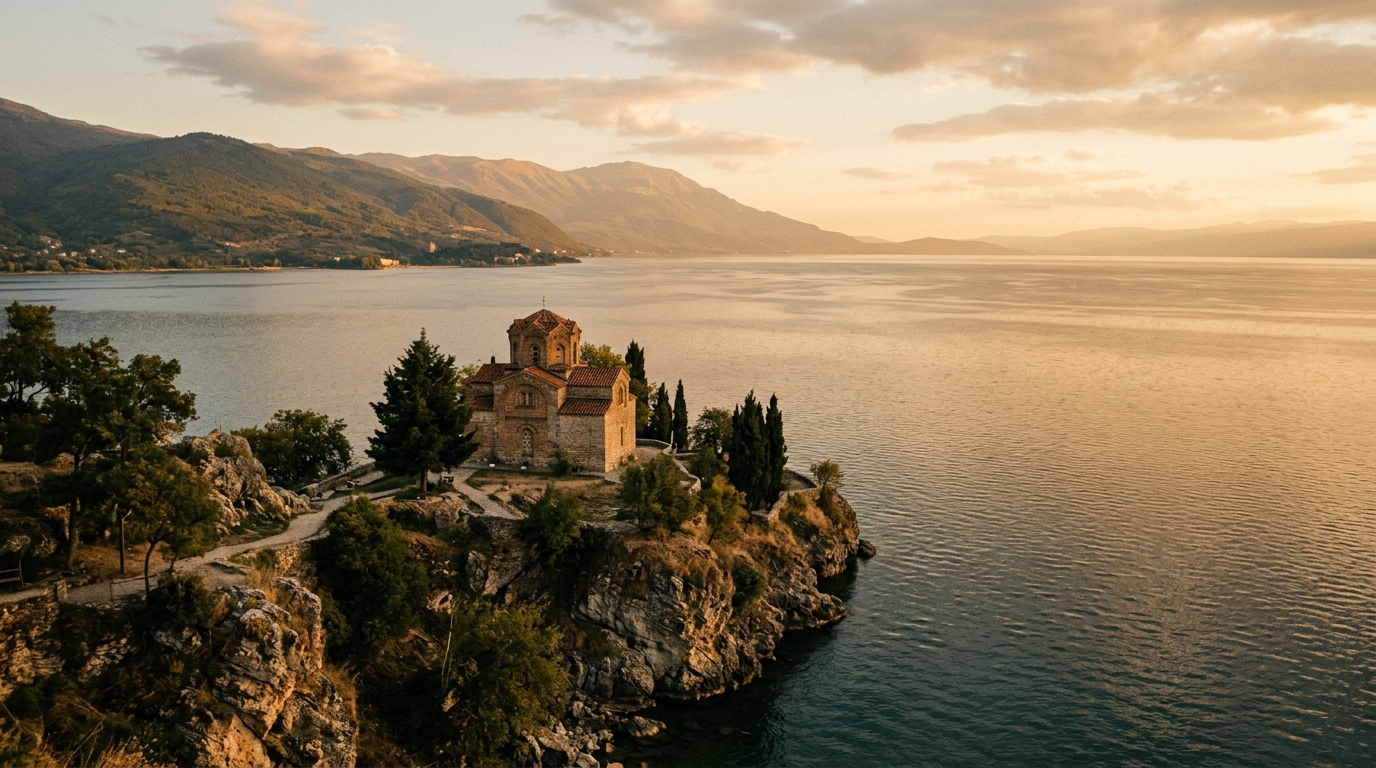
The road to Ohrid (A2/A3) is the route most rental drivers will take. It runs west from Skopje through Tetovo and Gostivar, then turns south through a mountain pass toward Kicevo before dropping down to the lake. The first section to Tetovo is a good dual carriageway. After that, it narrows to a two-lane road with mountain curves, slower trucks, and occasional overtaking opportunities. The total is about 170 km and takes 2.5 hours in normal conditions. It is not a difficult drive, but it is not a motorway either — pay attention, especially on the descent toward Ohrid where the road twists through forest.
Speed cameras exist on the A1 motorway and on the approach roads to Skopje. The fines are modest by European standards — starting at about 15 EUR for minor offenses — but the police occasionally set up mobile radar on the Skopje-Tetovo stretch, which has a variable speed limit. The general rule: stick to the posted speed in towns (strictly 50 km/h) and on the motorway (130 km/h), and you will have no problems.
Fuel is cheap — among the cheapest in the Balkans — at about 1.15-1.25 EUR per liter. Makpetrol stations are everywhere. On the Skopje-Ohrid road, stations become sparser between Gostivar and Kicevo, so top up before the mountain stretch.
Parking
Skopje’s center has a zone-based parking system that works reasonably well. Zones are marked on the pavement and on signs. You pay via SMS (in Macedonian Denar, so you need a local SIM or a phone that can send to Macedonian numbers) or at nearby machines. Rates run 0.30-0.60 EUR per hour — cheap by any standard.
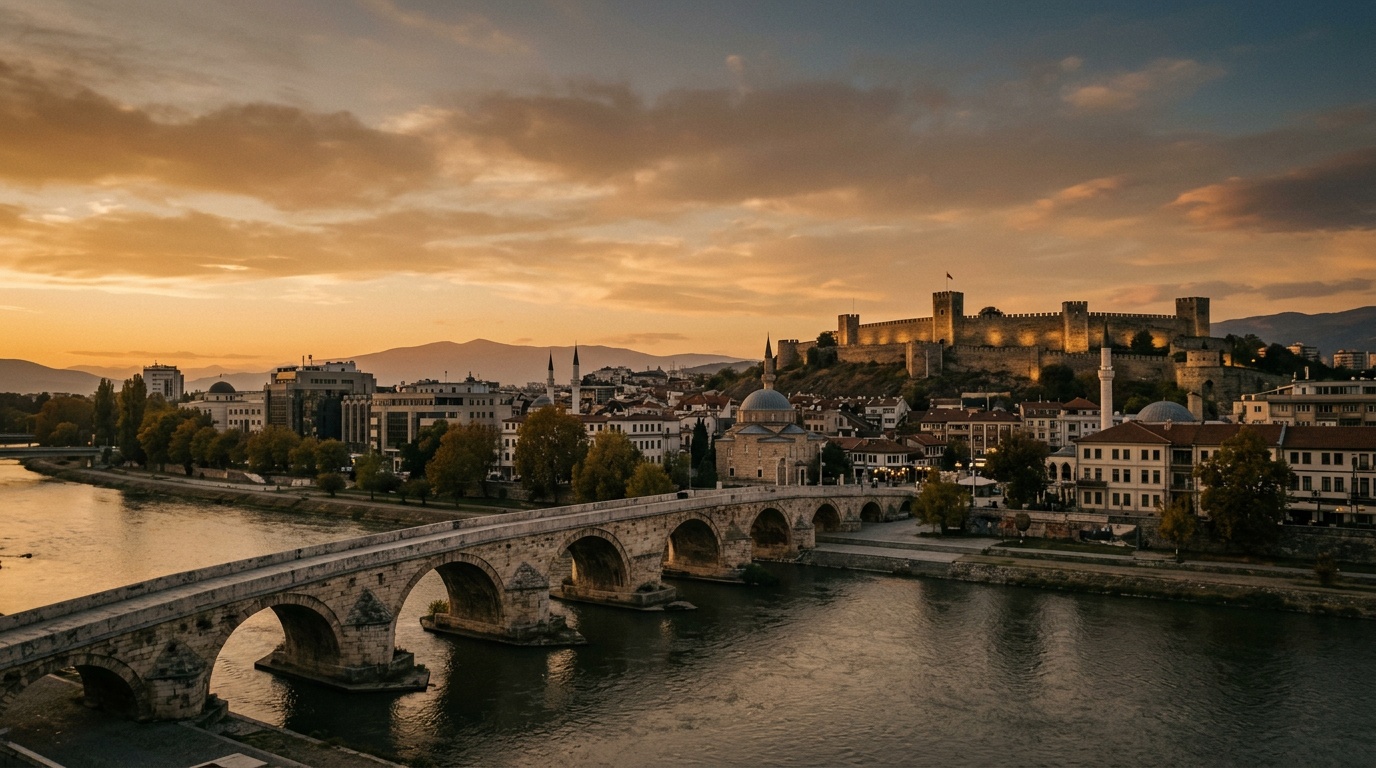
The GTC shopping center and the newer City Mall both have underground parking garages, about 0.80 EUR per hour. These are the most convenient options if you want to explore the city center on foot. Park at GTC, walk across the Stone Bridge to the Old Bazaar, see the fortress, and come back — it is all within a 15-minute radius.
Do not try to drive into the Old Bazaar. The streets are narrow, partly pedestrianized, and not built for modern cars. Even streets that technically allow vehicles will have you threading between market stalls and parked delivery vans. Park south of the river and walk.
Most Skopje hotels offer free parking or have an arrangement with a nearby lot. If you are staying near the center, ask the hotel before booking a garage — you might not need to.
Border crossings
Skopje is uniquely positioned for cross-border driving. Four international borders are within 1.5-3.5 hours, making it a natural hub for a multi-country Balkan trip.
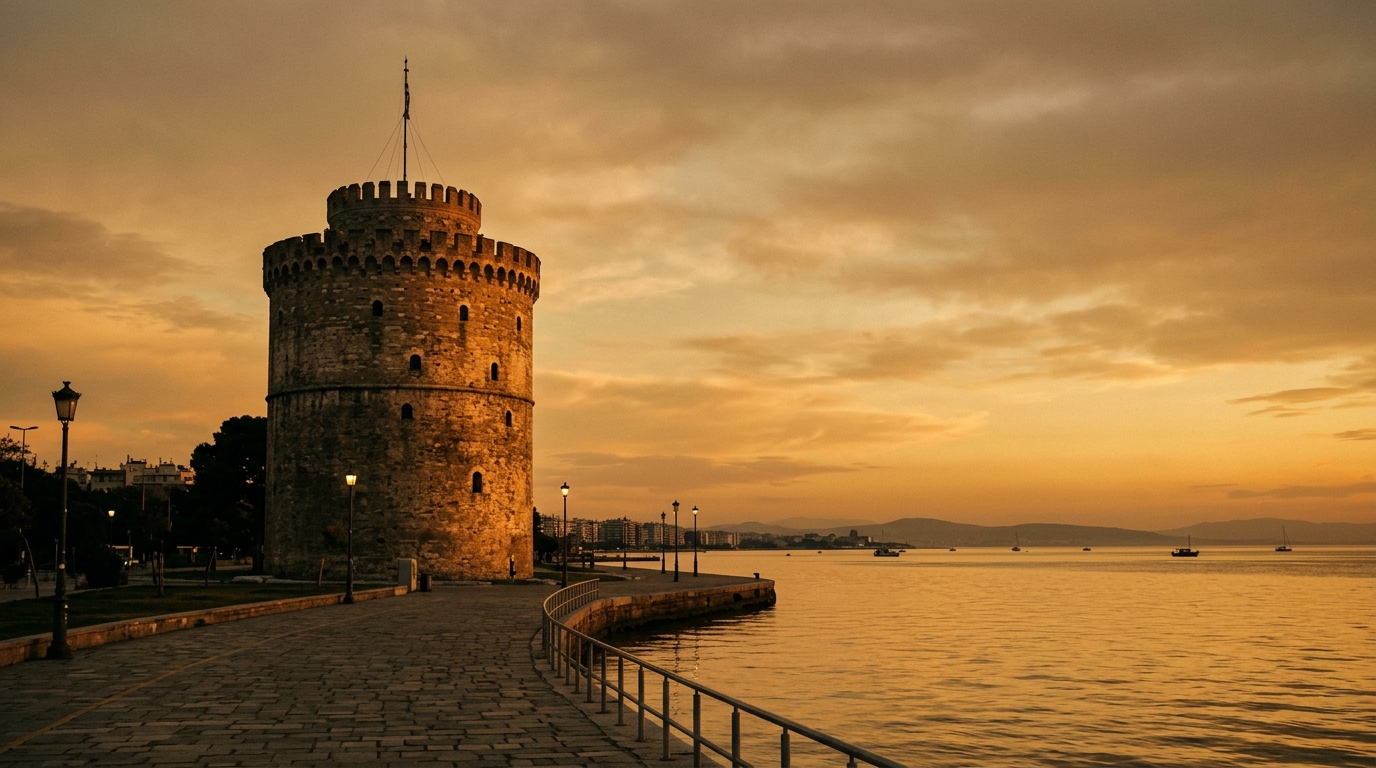
The busiest crossing is south to Greece at Bogorodica/Evzoni. The A1 motorway runs straight there — about 170 km, 2 hours to the border. The crossing itself is the bottleneck. In summer, especially around Greek holidays and weekends, waits of 30-90 minutes are normal. We crossed here in early July and waited 45 minutes — and that was a Tuesday. Once across, the Greek A1 motorway to Thessaloniki is excellent, and you are in the city within 30 minutes. The total Skopje-Thessaloniki trip is about 2.5 hours when the border cooperates.
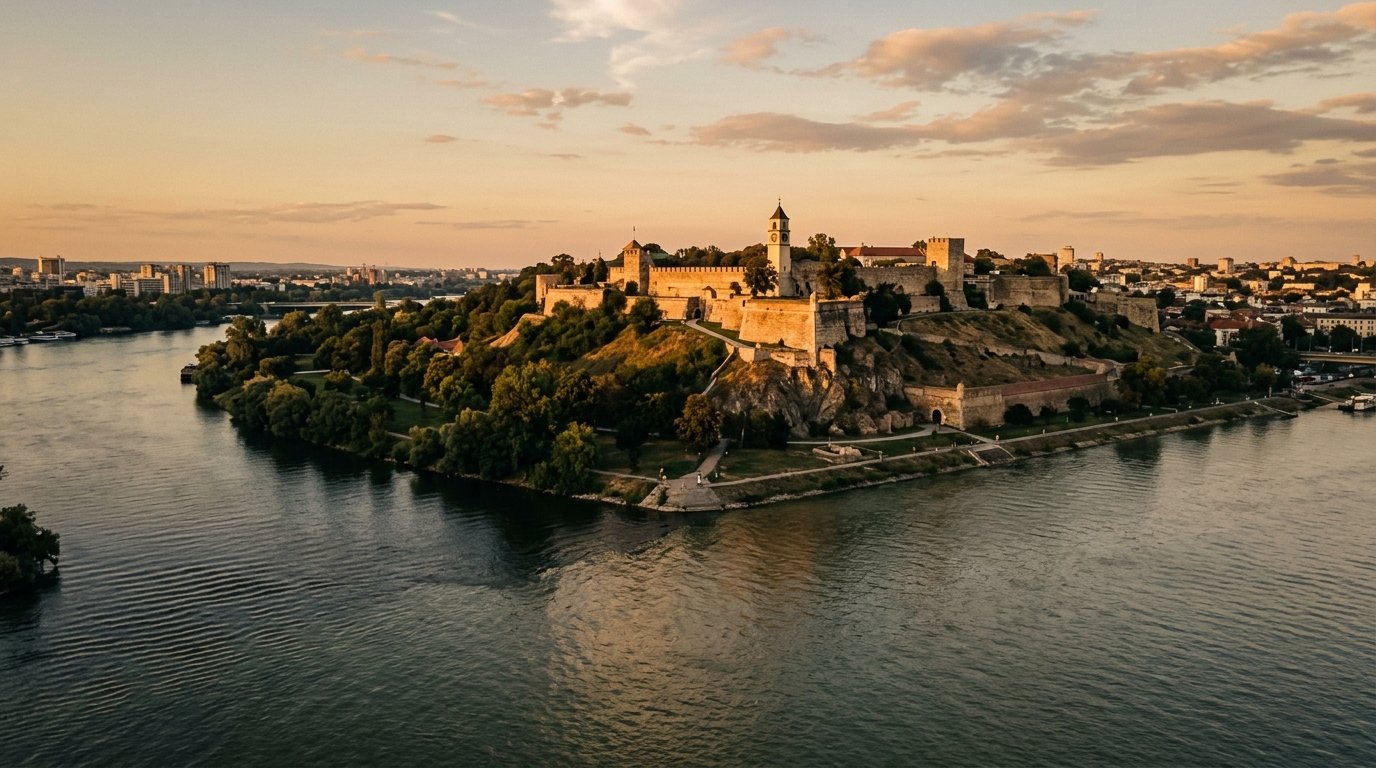
North to Serbia at Tabanovce/Presevo is much easier. The border is usually processed in 15-20 minutes, and the road on both sides is motorway-grade. Belgrade is about 4 hours away, with Nis as a logical halfway stop at 2.5 hours.
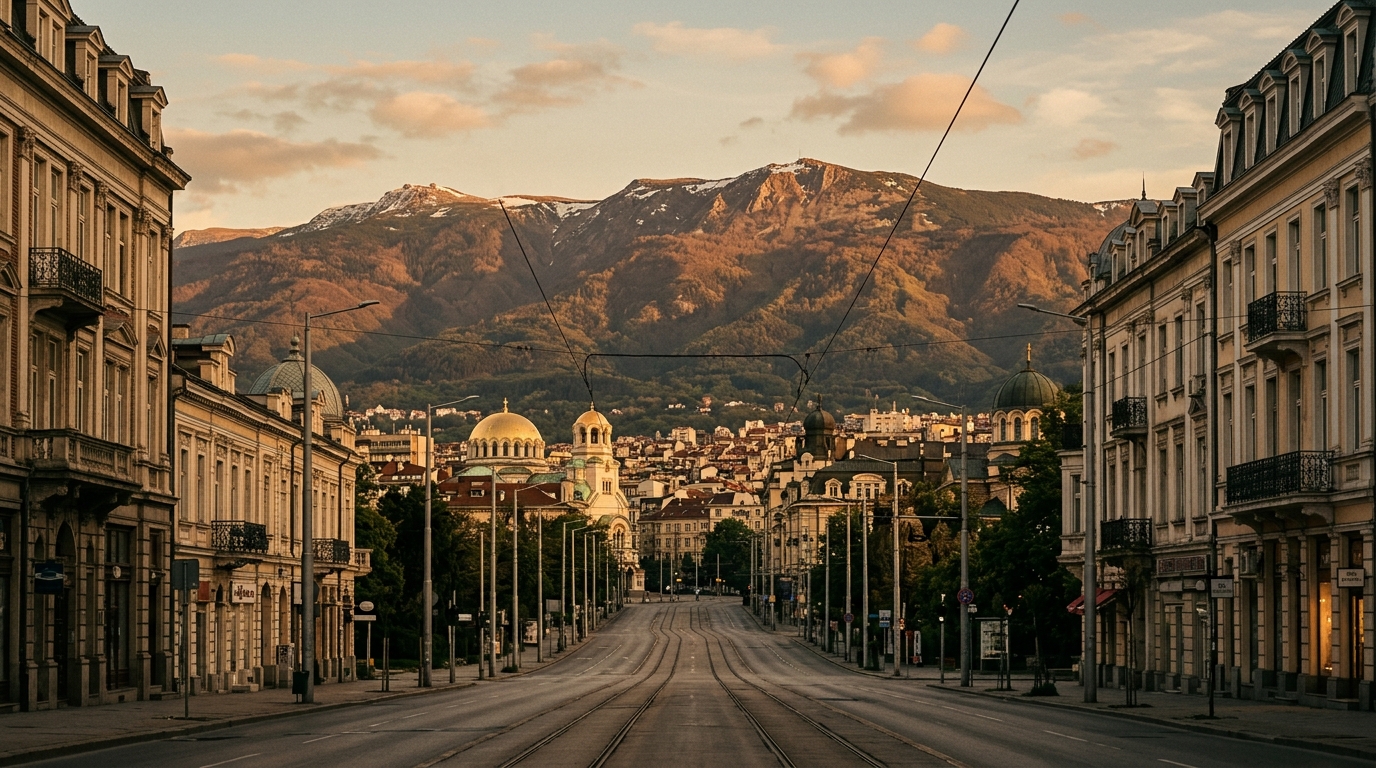
East to Bulgaria via Deve Bair is the least-traveled major crossing from Skopje. The road through Kumanovo is fine, but after Kriva Palanka it becomes a winding mountain road — scenic but slow. The border itself is usually quick, but the total drive to Sofia takes about 3.5 hours because of the road quality. Most travelers going Sofia-Skopje prefer to route through Nis instead, which uses motorway for most of the trip.
West to Albania is possible via the Blato crossing near Struga (close to Ohrid) or the Kjafasan crossing further south. Both are usually quick. Tirana is about 3.5 hours from Skopje. Not all agencies permit Albania — it is the most commonly restricted destination for Macedonian rental cars.
The standard cross-border fee from Skopje agencies is 20-40 EUR per border. Get the permitted countries list in writing before you sign.