Overview
Rhodes is one of those Greek islands where a rental car hits the sweet spot. It is big enough that you cannot walk everywhere — the island is about 80 km long — but small enough that you can circle the entire thing in a single day and still stop for lunch. The east coast has the beaches and resorts. The west coast has the wind and the wilder scenery. The interior has forested mountains, Byzantine churches, and villages where tourist footfall drops to zero. A car turns a three-beach resort holiday into a proper exploration.
The rental market on Rhodes is well-developed, with both international chains at the airport and local operators in town. Prices are moderate by Greek island standards — starting around 18 EUR/day in shoulder season, rising to 32-55 EUR in July and August. The local operators (Drive, Rodos Cars, Nick’s) tend to be cheaper and have cars that have clearly lived a life on island roads, which is fine for what you need them for. The internationals (Hertz, Budget, Sixt) offer newer fleets and smoother booking experiences.
Rhodes Airport (RHO) is small, functional, and handles the summer charter rush with reasonable efficiency. The rental desks are in the arrivals hall, and you are on the road within 30 minutes of landing. The airport sits on the west coast, 14 km from Rhodes Town, so your first decision is whether to head north to town or south along the coast. Either way, the main roads are good and the distances are short.
Driving tips
The main road along the east coast from Rhodes Town to Lindos (about 50 km) is the busiest route on the island and in good condition — two lanes, decent surface, clear signage. Traffic builds up in the Faliraki area during summer, but it is nothing compared to mainland Greek traffic. The drive to Lindos takes about an hour, or less if you leave early.
The west coast road is quieter, windier, and less maintained. The stretch from Rhodes Town down to the southern tip at Prasonisi passes through some genuinely empty countryside. The road narrows in sections, and the crosswind from the Aegean can be strong — not ideal for small, light cars if the Meltemi is blowing.
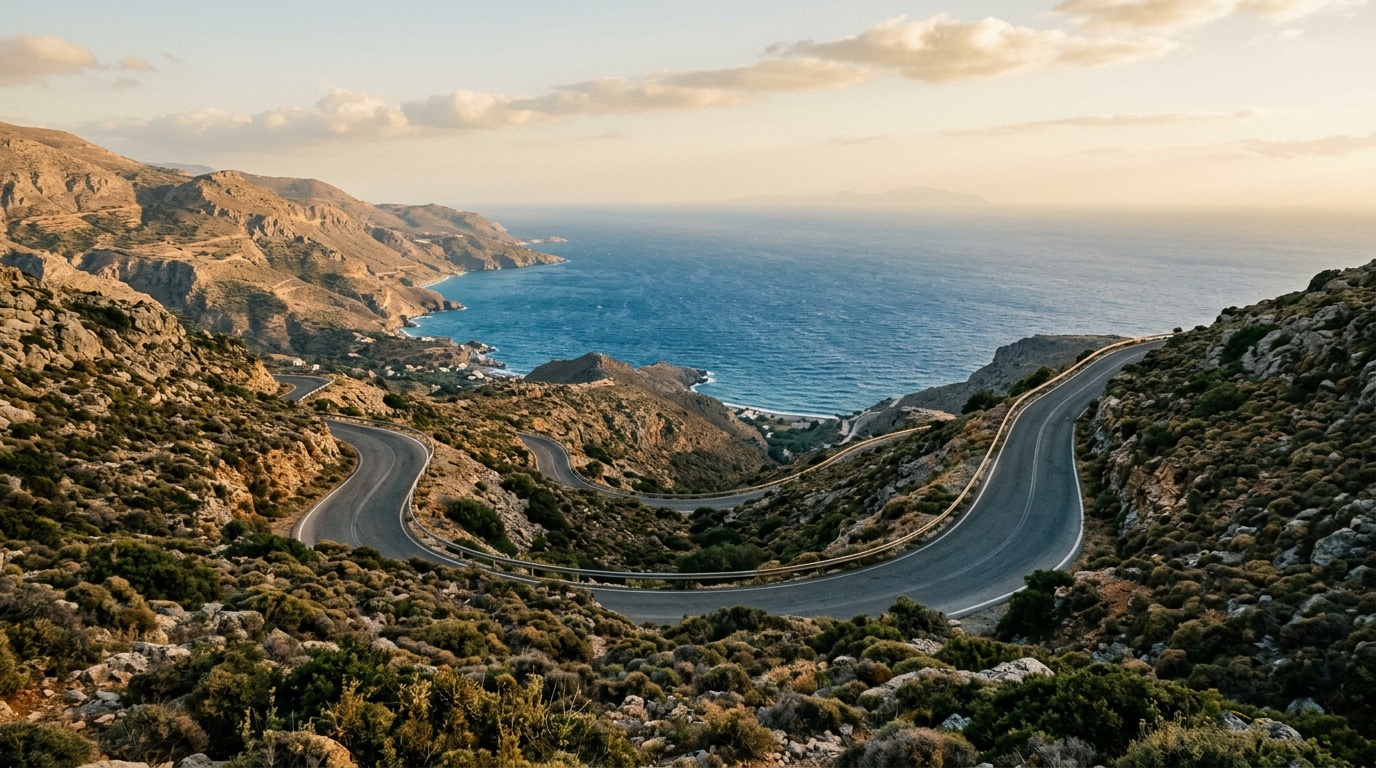
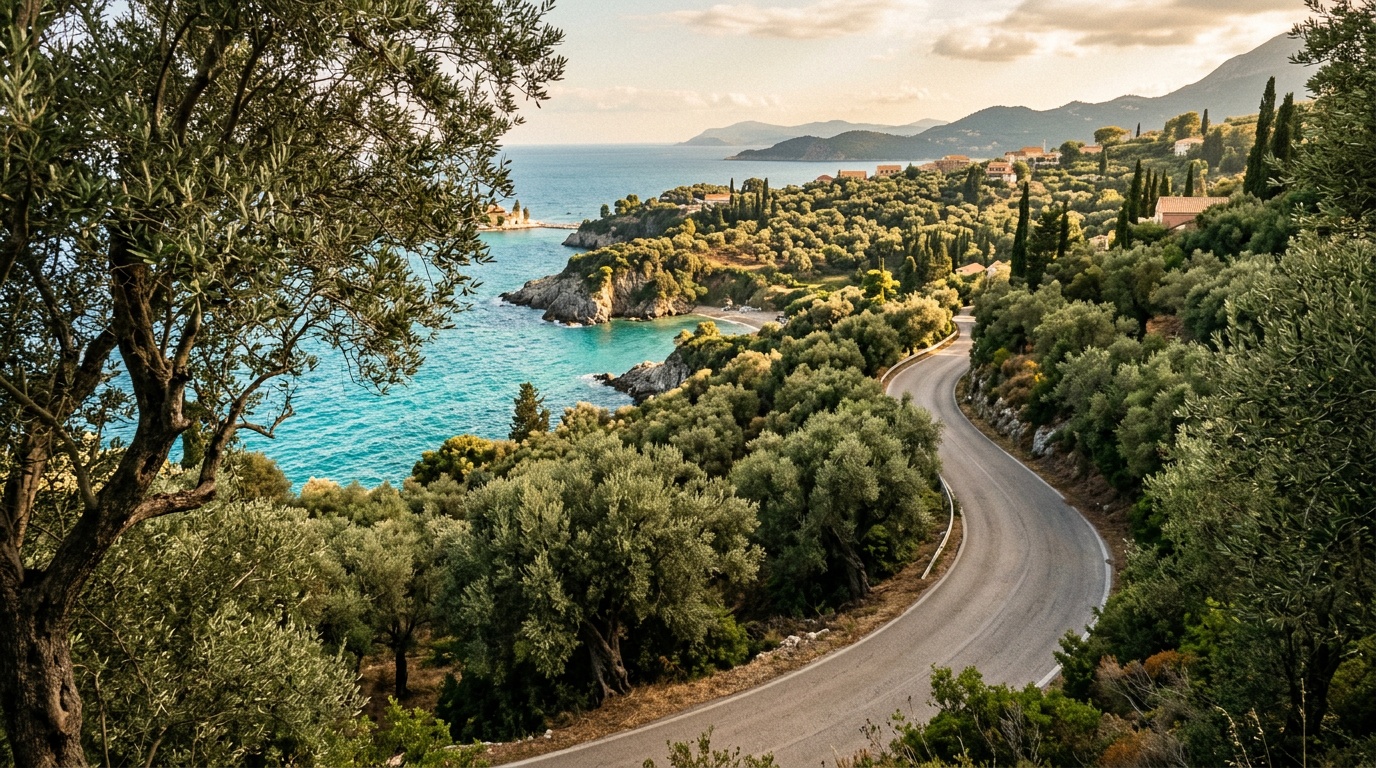
The interior mountain roads are where it gets fun. The road up to the village of Embonas in the wine country is winding and scenic. The road to the monastery at Tharri cuts through pine forest. None of these roads are dangerous, but they reward careful driving and punish impatience.
Rhodes has very few speed cameras, but police spot checks appear on the Lindos road and near Faliraki in summer. The standard island speed limit is 50 km/h in villages, 90 km/h on open roads. The real speed regulators are the curves and the occasional goat — same as everywhere in Greece.
ATV and scooter traffic is heavy in the resort areas. Tourists on rented ATVs are the biggest wild card on Rhodes roads — they stop without warning, wobble on curves, and sometimes travel in groups that block the road. Give them space and do not assume they have any idea what they are doing, because they probably do not.
Parking
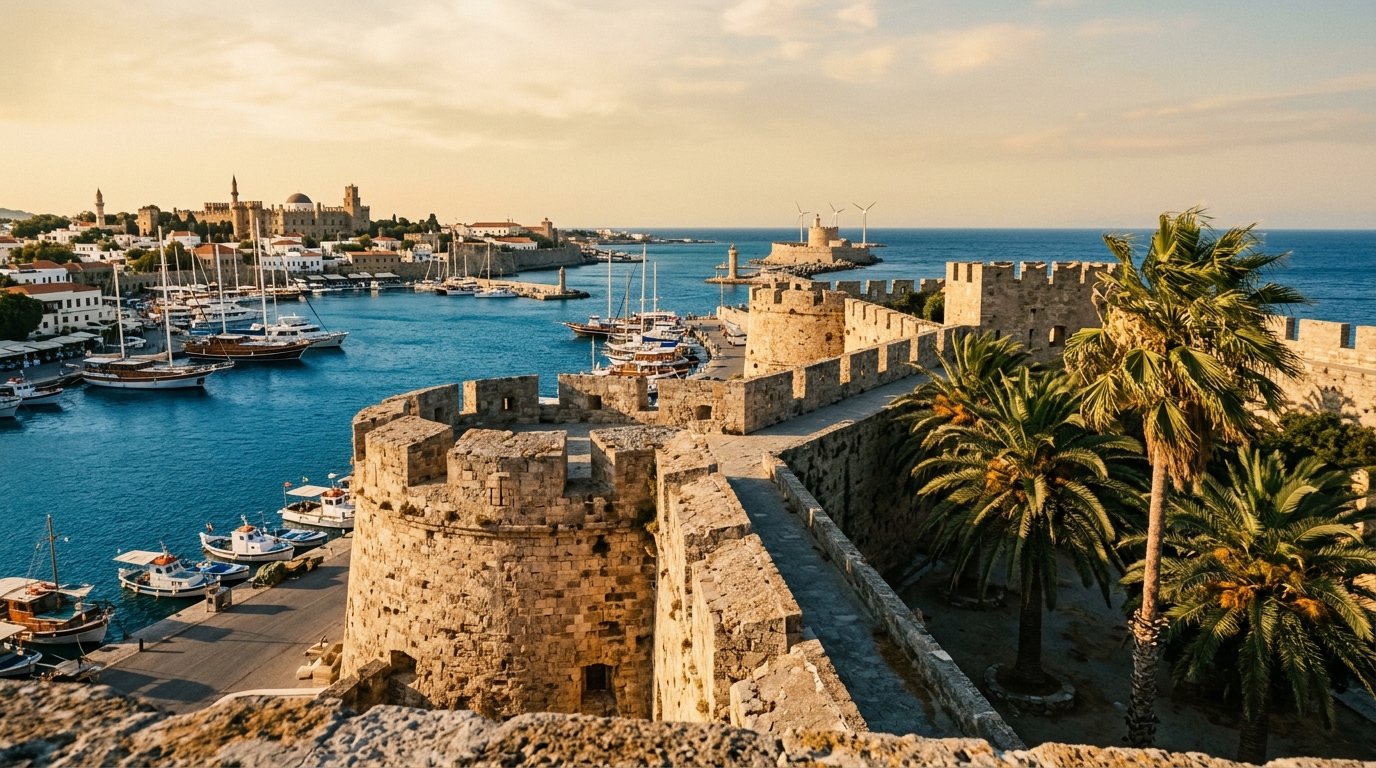
The medieval old town of Rhodes — the main attraction — is car-free. You cannot drive through the gates, and you would not want to even if you could. The parking lots outside the walls are your only option. The D’Amboise Gate lot is the most convenient, charging about 3-5 EUR for a full day. The commercial harbor lot works too but is a longer walk to the old town.
In the new town of Rhodes, street parking is available but competitive in summer. The blue zone near the harbor charges 1-2 EUR/hour. The residential streets further back from the seafront are easier.
Lindos is a special case. The village is built on a steep hillside with streets too narrow for anything wider than a donkey. There is a parking lot at the village entrance that charges 5 EUR/day in summer and fills up by mid-morning. If you arrive after 11 AM in July or August, you may end up parking along the main road 500 meters back and walking in. Alternatively, arrive early, park, and claim your spot for the day.
The rest of the island is easy. Beach parking is mostly free or a token 2-3 EUR. Hotel parking at the resorts is usually included. The further south you go from the resort strip, the more empty the roads and the easier the parking.