Overview
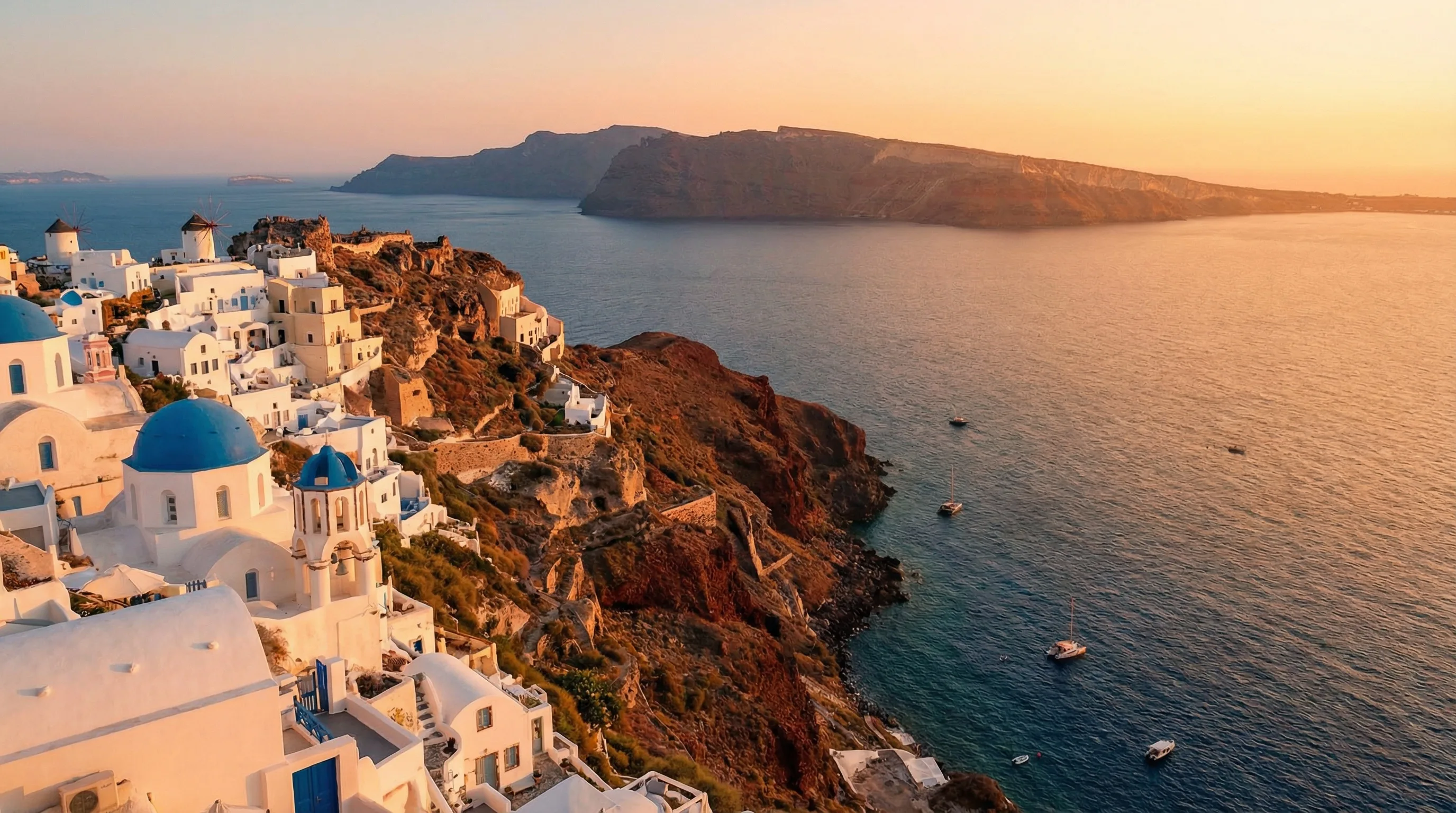
Corfu is the greenest Greek island we have driven, and possibly the most nerve-wracking. The landscape is stunning — cypress trees, olive groves, Venetian villages, and coastline that alternates between rocky coves and turquoise bays. The roads, however, were designed for donkeys and have been only partially upgraded for cars. Narrow, winding, and sometimes single-lane with steep drops on one side, they demand your full attention and reward it with scenery that is worth every white-knuckle moment.
The rental market on Corfu is healthy but not cheap by Greek standards. Economy cars start around 22 EUR/day in shoulder season, climbing to 38-60 EUR in peak summer. Corfu attracts a lot of British and German package tourists, which keeps demand high and prices firm. The airport (CFU) is almost comically close to town — 3 km, practically inside it — and the rental desks are right there in the small arrivals hall. There are also ferry connections from Igoumenitsa on the mainland, and several agencies near the port for those arriving by sea.
We would not say a car is strictly necessary on Corfu — buses run a reasonable network to the main beaches and towns. But a car is what turns a Corfu trip from pleasant to genuinely special. Paleokastritsa, the west coast’s postcard cove, is 25 minutes from town. The empty northeast coast, where Albanian mountains loom across the strait, is 40 minutes. The mountain villages of the interior — Lakones, Pelekas, Sinarades — are barely on the tourist radar and completely inaccessible without your own wheels. The whole island is 60 km long, so nothing is far, but the roads make everything take twice as long as the map suggests.
Driving tips
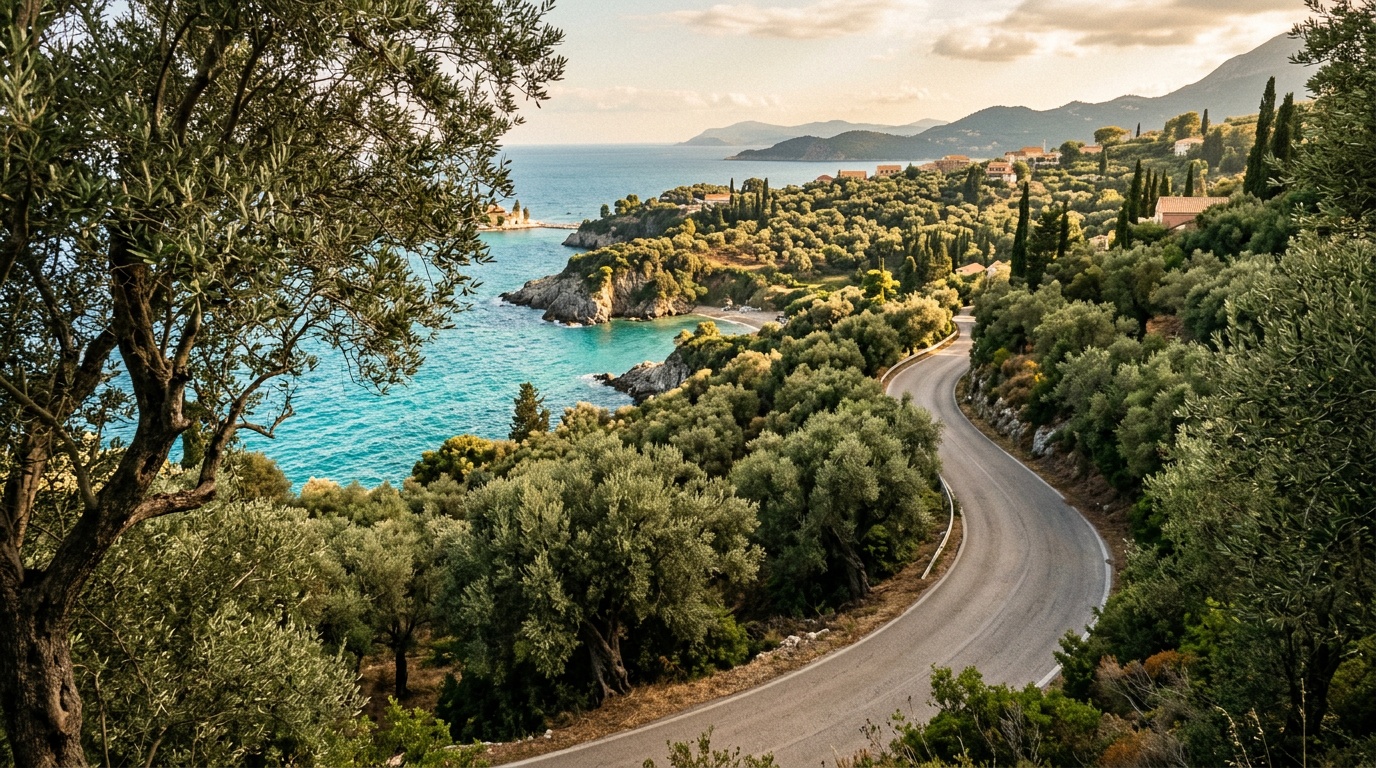
The first thing to understand about Corfu’s roads is that the main road across the island — from the airport through Corfu Town and north along the east coast — is fine. Dual carriageway, reasonable surface, normal traffic. Everything else on the island ranges from “narrow but okay” to “how did that bus get through here.”
The west coast roads are the most dramatic. The descent to Paleokastritsa switchbacks down a hillside with views that make you want to stop and stare, which is exactly what you should not do while navigating a blind curve. The road to Angelokastro fortress is a single lane with passing places. The road to Porto Timoni beach dead-ends at a parking lot, and then you walk.
The north of the island is flatter and easier to drive. The roads to Sidari, Kassiopi, and the beaches along the north coast are straightforward two-lane affairs. The south is hillier and more forested, with roads that narrow dramatically once you leave the main coastal route.
Two-way traffic on single-lane roads is the defining Corfu driving experience. When you meet an oncoming car, someone has to reverse to a wider spot. The locals are practiced at this negotiation — a flash of headlights, a hand wave, a mutual understanding of who has more room to back up. You will get the hang of it quickly. The key is to drive slowly enough that you can stop when the oncoming bus appears around the curve.
Scooter and ATV rentals are popular with tourists, and they are everywhere on the roads. Many of the riders are inexperienced and unpredictable. Give them wide berth, especially on curves.
One more thing: Corfu gets significantly more rain than the Cyclades or Dodecanese islands. If you are here in spring or early autumn, wet roads on mountain sections can be slippery. Fallen leaves on roads are a genuine hazard.
Parking
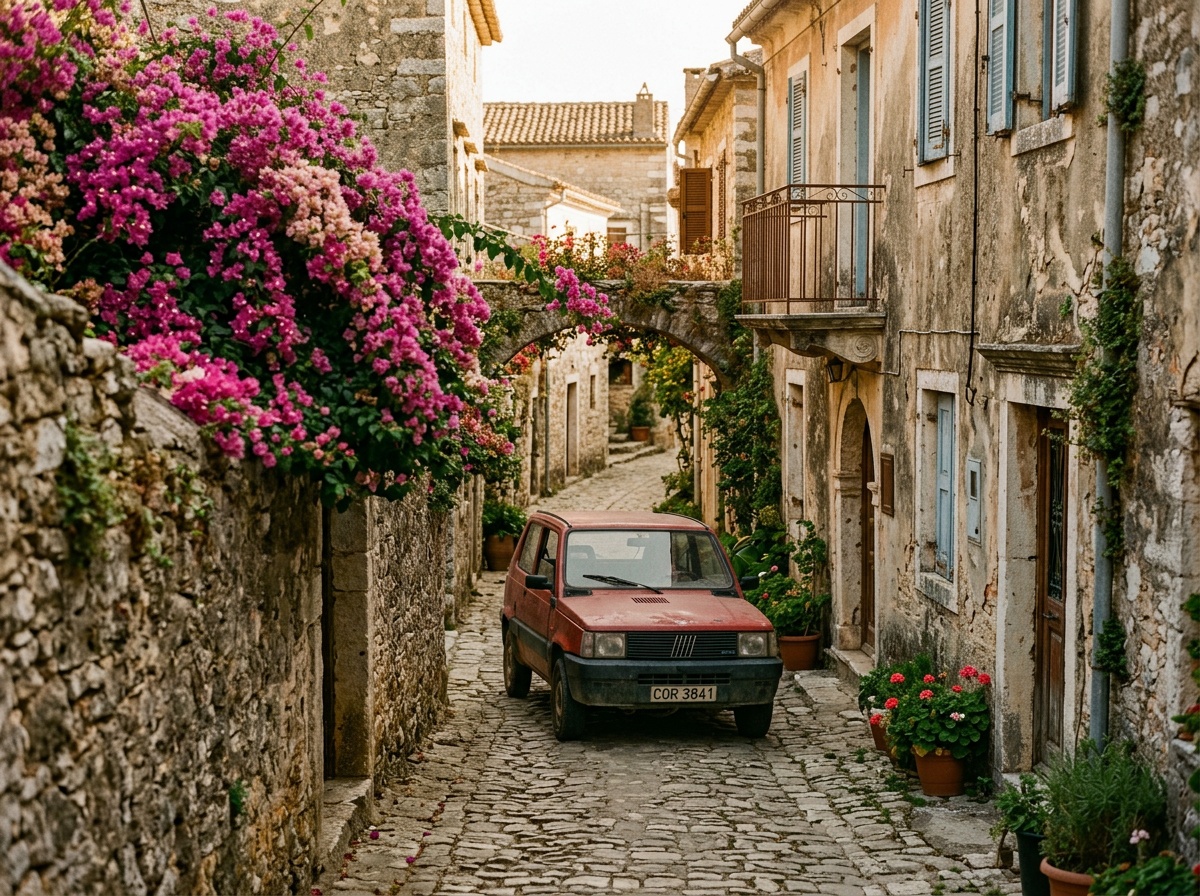
Corfu Town parking is limited. The old town is a UNESCO-listed maze of Venetian alleys — no cars. The Esplanade area and the streets around the old fortress have some paid spots but they fill up fast. Your best bet is the paid lot near the new port (4-6 EUR/day) or the free street parking along Garitsa Bay south of town, which is a 10-minute walk to the center.
At the beaches, parking varies. Paleokastritsa has a paid lot (3-5 EUR/day in summer) and some free roadside spots further up the hill. Canal d’Amour in Sidari has a small lot that overflows in July-August. The less famous beaches — Myrtiotissa, Rovinia, Halikounas — have informal parking areas that are rarely full.
If you are staying at a resort or villa, parking is almost always included. The bigger resorts on the north and east coasts have their own lots. The smaller guesthouses in the interior usually have a yard or roadside space for your car.
Border crossing
Corfu sits just 2 km from the Albanian coast at its closest point, and there are regular hydrofoil ferries from Corfu Town to Saranda, Albania (30 minutes). However, you cannot take a rental car on this ferry — no Greek agency will authorize it, and even if they did, the insurance would not cover Albania.
If you want to combine Corfu with an Albanian side trip, the approach is: rent on Corfu, return the car, take the ferry as a foot passenger, and rent a separate car in Saranda. Albanian rentals are cheap (from about 18 EUR/day) and the Albanian Riviera is spectacular, so it is worth the logistical effort if you have time.
The mainland ferry from Corfu to Igoumenitsa (1.5 hours) is the other route off the island. Some agencies allow you to take the car on this ferry if you are doing a one-way rental to the mainland — check the policy at booking. Igoumenitsa itself is the gateway to the Epirus region and the route north to Albania via the Kakavia border crossing.