Car Rental in Nicosia
Overview
Nicosia is the one city in Cyprus where most tourists do not rent a car, and the one where having a car is most useful for what lies beyond it. The capital itself is a city of 350,000 people (the greater area), split in half by the UN-patrolled Green Line that has divided the island since 1974. The southern (Republic of Cyprus) side is where you will rent, drive, and park. The northern (Turkish-controlled) side is where you can walk across for a few hours but cannot take your southern rental car.
The city does not have its own airport. Larnaca is 50 km south, about 40 minutes on the A2 motorway. If your plan is to spend time in Nicosia, the practical approach is to pick up a car at Larnaca Airport and drive up, or rent from a Nicosia-based agency that will deliver to your hotel. The second option is often simpler for business travelers, who are the primary rental market in Nicosia – this is the commercial and governmental center of Cyprus, not a tourist destination.
Pricing in Nicosia is among the cheapest on the island. Economy cars start at 10-16 EUR per day in winter, 14-22 EUR in the shoulder months, and 25-38 EUR in peak summer. The lower demand (compared to the coastal cities) keeps rates down. The agency selection is smaller than in Larnaca or Paphos, but several well-established locals operate here, and hotel delivery is standard practice.
The real value of a Nicosia rental is the access it gives you. The Troodos Mountains are 45 minutes south. Larnaca and its beaches are 40 minutes in the other direction. You sit in the geographic center of the island, equidistant from the coast in every direction, with the motorway network radiating outward. For a trip that combines city exploration with mountain and beach days, Nicosia is an underrated base.
Driving tips
Nicosia traffic is the worst on the island. We say that with confidence, having driven in all four major cities. The road layout inside the old town (within the Venetian walls) is a medieval warren of one-way streets, dead ends, and confusing intersections. Outside the walls, the ring road and the radial avenues handle commuter traffic that, in proportion to the city’s size, is remarkable. Morning rush hour (7:30-9 AM) and evening rush (4-6 PM) create legitimate gridlock on the main arteries, particularly around Makarios Avenue and the approach roads to the motorway.
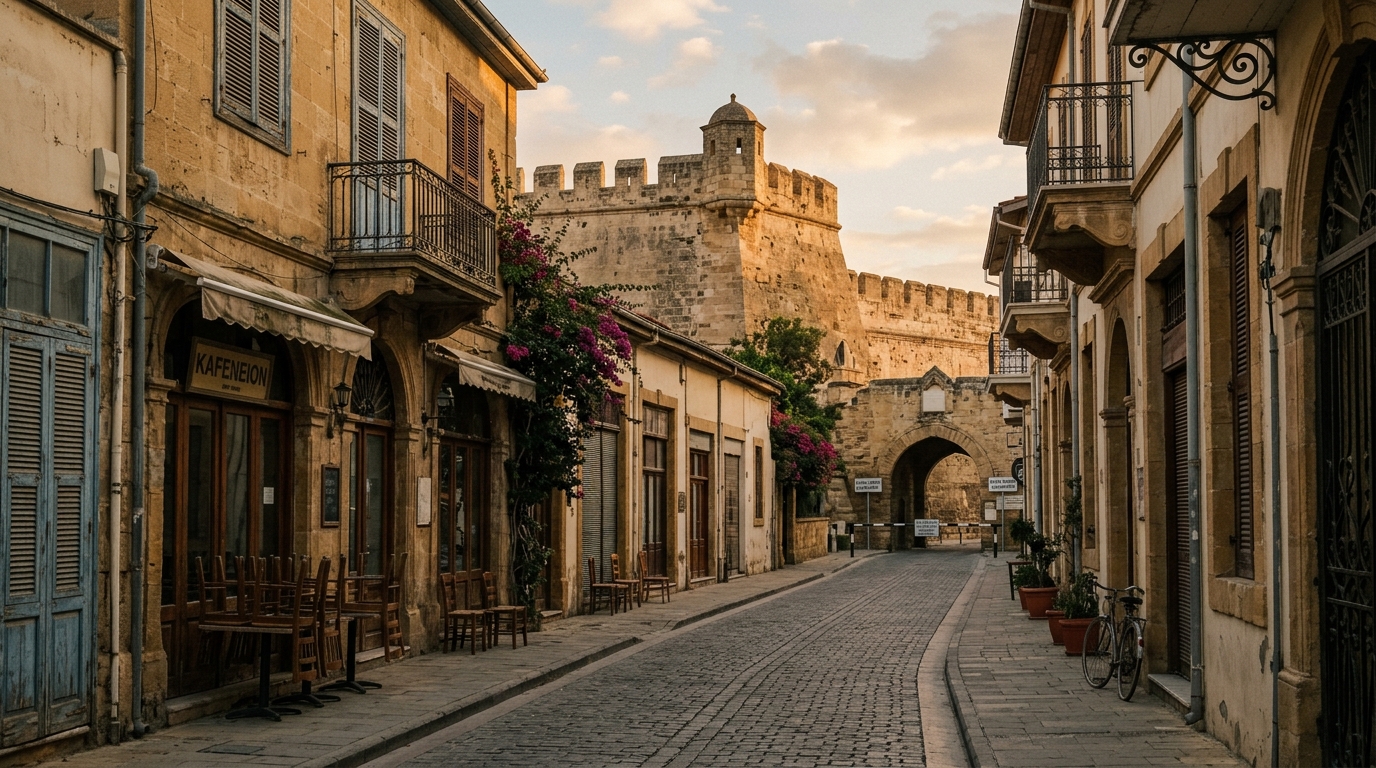
The good news: you do not need to drive inside the old town at all. Park on the periphery or in a garage, and walk. The old town within the walls is compact – maybe 1.5 km across – and is best explored on foot anyway. Ledra Street, the main pedestrian spine, takes you from the commercial center to the Green Line crossing point in a 10-minute walk.
Outside Nicosia, the driving is excellent. The A1 motorway south to Limassol and the A2 east to Larnaca are both modern and well-maintained. The road north into the Troodos Mountains (the B9 via Kakopetria) climbs through foothill vineyards and pine forests, reaching the ski station area in about 45 minutes. This is the most direct mountain access from any Cypriot city and makes Nicosia the best base for Troodos day trips.
Speed cameras are present on the approach roads to Nicosia, particularly on the A2 from Larnaca and the A1 from Limassol. Within the city, enforcement is lighter, but red-light cameras exist at major intersections. The usual Cypriot speed limits apply: 50 km/h in town, 80 km/h on open roads, 100 km/h on motorways.
Left-hand driving in Nicosia is more challenging than on the coast, because the city traffic is denser and the decision-making faster. Roundabouts, lane merges, and multi-lane intersections all require the spatial awareness that takes a day or two to develop. If Nicosia is your first stop in Cyprus, consider taking a taxi from the airport and collecting your rental car the next day, when you have had time to observe how traffic moves on the left from the passenger seat.
Parking
Parking inside the Venetian walls (the old town) is limited and frustrating. The streets are narrow, many are one-way, and the few metered spots fill up quickly on weekday mornings. The Solomou Square underground garage, near the Ledra Street entrance to the old town, is the practical solution: 1.50 EUR per hour, reliably available, and within walking distance of everything inside the walls. Park there, walk to the Green Line crossing, explore the buffer zone, see the Leventis Museum and the Buyuk Han on the northern side, and walk back. This is how locals who work in the old town handle it.
Outside the walls, the Makarios Avenue area has metered parking on side streets at 0.50-1 EUR per hour. Availability is better here than inside the walls, and you are still only a 10-minute walk from the old town gates. The Eleftheria Square area, at the main entrance to the walled city, has a mix of metered spots and small private lots.
For longer stays or practical errands, the Mall of Cyprus (west of the center) has free parking in a massive lot. It is not useful for sightseeing but handy if you are passing through and need groceries, SIM cards, or other supplies before heading to the mountains or the coast.
One note on the Green Line: you can cross on foot at the Ledra Street checkpoint (in the center of the old town) with just your passport. The crossing takes about 5 minutes and lets you walk into north Nicosia, where the Buyuk Han, Selimiye Mosque (formerly St. Sophia Cathedral), and the covered market are all within a 15-minute walk. You cannot take your southern rental car across. If you want to drive in the north, you would need to rent separately from a northern agency – and your southern insurance does not apply. We recommend the walking crossing: it is quick, interesting, and keeps your rental agreement intact.
Day trips from Nicosia
The case for renting in Nicosia is the day trips. The Troodos Mountains are the obvious one: the B9 road via Kakopetria climbs to the Troodos resort area in 45 minutes. Kakopetria itself, a stone village beside a mountain stream, is worth a lunch stop. Higher up, the Kykkos Monastery (Cyprus’s wealthiest and most famous) is about 75 minutes from Nicosia through dense pine forests. In winter, the Troodos ski station operates on Mount Olympus – it is small and basic, but the novelty of skiing on a Mediterranean island has its own appeal.
East of Nicosia, the road to Larnaca passes through a flat plain of wheat fields and olive orchards. The drive is unremarkable but fast (40 minutes on the A2), making Larnaca’s beaches and salt lake easily accessible for a half day. West of Nicosia, the ancient site of Tamassos (20 km, 25 minutes) has royal tombs dating to the sixth century BC and receives almost no tourist traffic – a quiet archaeological stop that contrasts sharply with the crowded coastal sites.
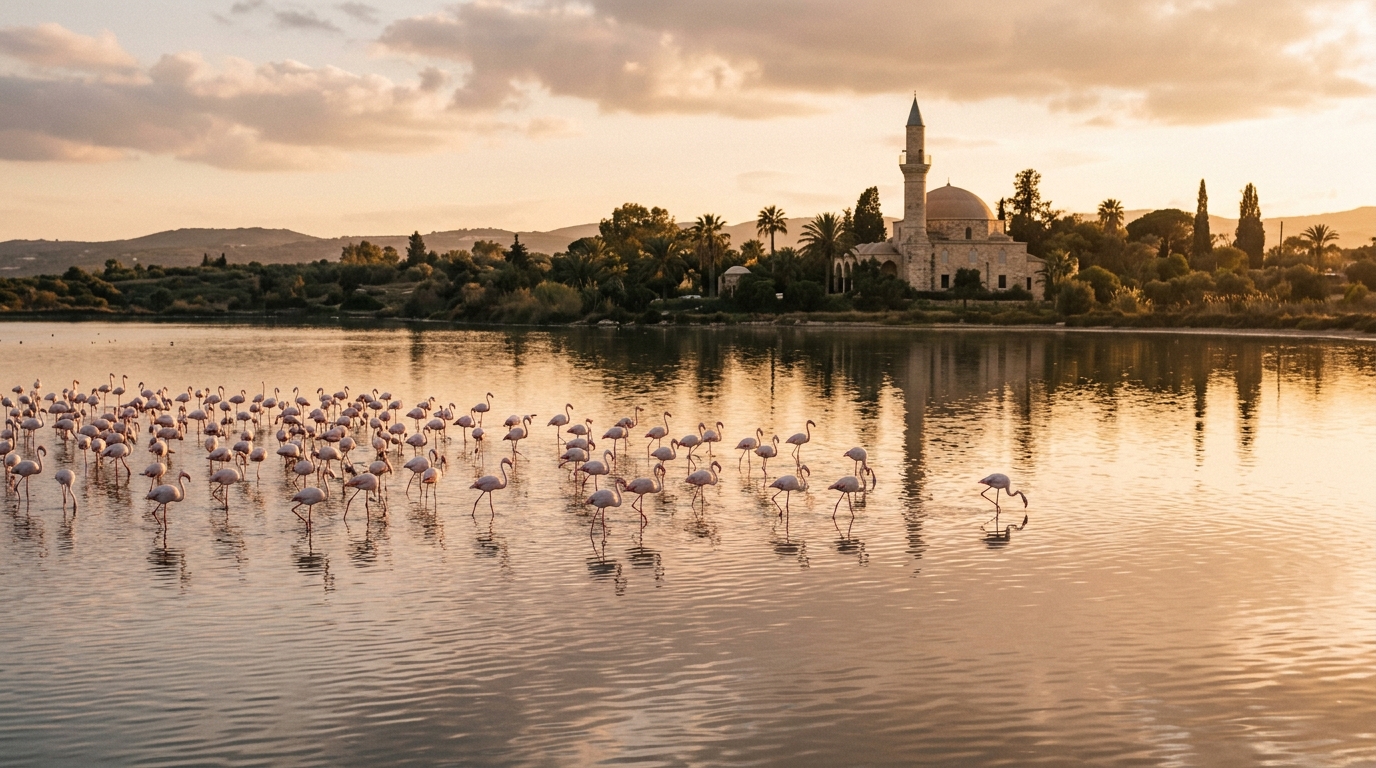
For those interested in the division of the island, a driving circuit of the Green Line perimeter from the southern side is a sobering experience. The UN buffer zone, abandoned since 1974, is visible in places – overgrown buildings, empty streets, and watchtowers. The Deryneia viewpoint, east of Famagusta, looks across the buffer zone into the ghost city of Varosha, sealed off since the Turkish invasion. It is one of the most unusual sights in Europe, and only accessible with your own transport.